


Government agencies, development organizations, and philanthropic institutions manage billions of dollars in grants every year. Yet, despite the scale of these investments, many organizations still rely on manual processes, siloed sy stems, and paper-driven verification. The result is predictable: delays, inefficiencies, compliance risks, and—most concerning—leakage that undermines the very purpose of the program.
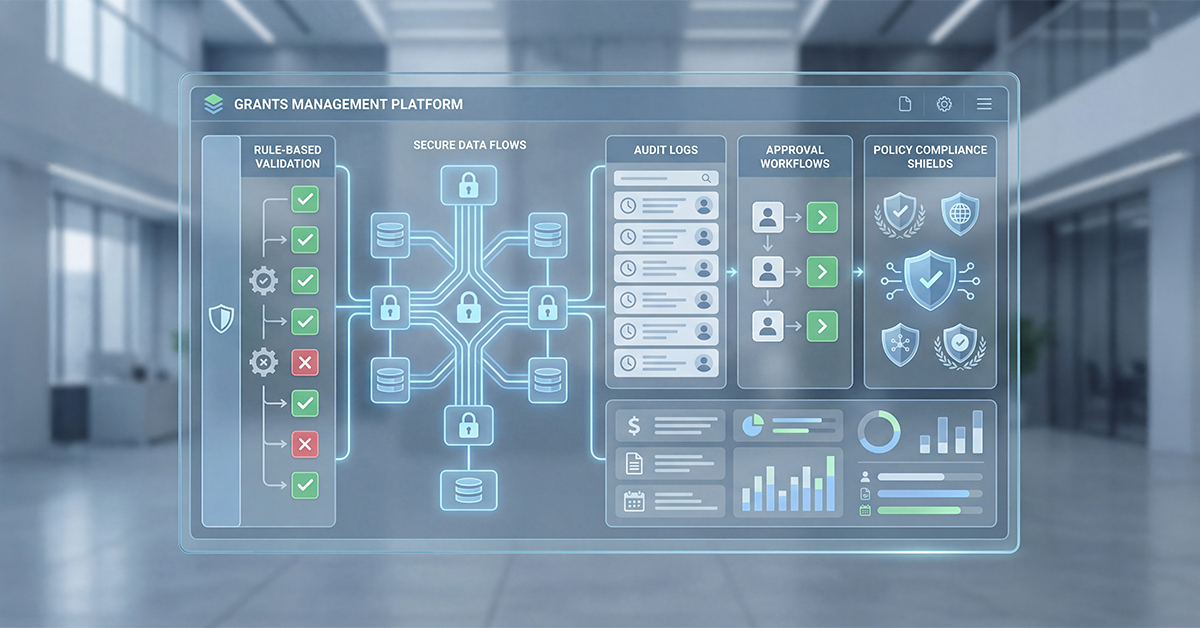
A modern Grants Management System (GMS) addresses these challenges by bringing structure, transparency, and real-time control across the full grants lifecycle. Whether the focus is economic development, education, workforce programs, small business incentives, or community initiatives, a GMS enables organizations to ensure that every dollar is allocated, disbursed, and monitored with accuracy and accountability.
In this blog, we explore how a Grants Management System strengthens oversight, enhances decision-making, and significantly reduces leakage—while improving the overall experience for applicants and administrators.
.jpg)
The Accountability Gap in Traditional Grants Processes
Traditional grants management is often complex and fragmented. Agencies face a series of systemic challenges:
- Manual data entry creates multiple opportunities for errors or inconsistencies.
- Lack of centralized visibility makes it difficult to monitor beneficiaries, duplicate applications, and fraudulent claims.
- Limited documentation trails hinder audits and slow down investigations.
- Paper-driven processes reduce transparency and increase processing times.
- Disjointed verification mechanisms (email-driven communication, offline submission of documents) create compliance vulnerabilities.
These gaps make it hard for agencies to ensure that funds reach the right recipients, in the right amounts, at the right time.
An automated grant management system changes that equation.
.jpg)
1. Strengthening Eligibility Verification
Leakage often begins at the very first step: identifying who is eligible. An end-to-end grant management solution uses a digital, rule-driven approach to validate applicants.
Automated Eligibility Checks
Instead of manual review, a grant management system performs instant checks based on:
- Program-specific eligibility rules
- Income or demographic criteria
- Organizational status
- Geographic requirements
- Historical participation or disbursement records
These rules not only increase accuracy but also ensure consistent and unbiased decision-making.
Identity & Document Verification
Through integrations with external systems—identity verification services, government registries, KYC databases, tax information systems, and API-based document validation—GMS platforms ensure the authenticity of every applicant. Automated KYC, OCR-driven document parsing, and digital signature validation significantly cut down on fraudulent claims.
2. Creating a Single Source of Truth
One of the most powerful features of a Grant Management Software is its ability to centralize all grant-related information. Instead of scattered files, spreadsheets, and email threads, the entire lifecycle is captured in a unified platform.
End-to-End Visibility
Program administrators gain real-time visibility into:
- Applications received
- Verification status
- Evaluation scores
- Disbursement history
- Compliance documentation
- Impact metrics
This eliminates data silos and provides a single source of truth for all stakeholders—improving transparency internally and externally.
3. Enabling Audit-Ready, Traceable Workflows
Transparency is not just about visibility—it’s about traceability. A GMS automatically creates a digital trail of every interaction, decision, and document.
Workflow Logs & Time Stamps
Every step is recorded with:
- Who performed an action
- What decision was taken
- When it occurred
- What supporting documentation was used
This level of traceability is invaluable for audits, compliance reviews, and oversight committees.
Configurable Approval Workflows
Multi-level approvals—financial, administrative, program-specific—ensure that no step is skipped and every disbursement is compliant with policy. When approvals move digitally, the risk of bypassing controls is virtually eliminated.
.jpg)
4. Reducing Duplicate, Ineligible, or Fraudulent Applications
Leakage is often driven by duplication or inaccurate beneficiary lists. A robust Grant Management System uses smart rules and advanced analytics to flag anomalies early.
Duplicate Detection
The system scans for:
- Repeated identities
- Multiple applications from the same organization
- Reuse of email/phone numbers
- Suspicious patterns in documentation
Fraud Pattern Analysis
AI and behavioral analytics highlight potential red flags such as:
- Unusual application volumes from a single entity
- Document tampering
- Non-matching demographic or financial details
By catching fraudulent or duplicate claims before funds are disbursed, agencies significantly reduce losses.
5. Streamlining Disbursement and Preventing Leakages Downstream
Once funds are approved, leakage often occurs during disbursement or post-disbursement monitoring. A GMS mitigates this through secure, traceable, and fully digitized payment processes.
Secure Disbursement Mechanisms
The system integrates with:
- Treasury or finance systems
- Digital payment gateways
- Banking networks
- Automated reconciliation services
This ensures funds are transferred only to verified and approved beneficiaries.
Reconciliation & Tracking
Matching disbursements with approved allocations is fully automated—reducing discrepancies and enabling faster financial audits.
6. Real-Time Monitoring & Performance Tracking
Accountability does not end with disbursement. A modern GMS supports ongoing program monitoring, helping agencies measure outcomes and maintain transparency.
Dashboards for Impact Measurement
Stakeholders can track:
- Disbursement progress
- Beneficiary performance
- Fund utilization
- Regional distribution
- Program KPIs
Alerts & Notifications
If milestones are missed or documentation is pending, the system automatically sends alerts—ensuring timely compliance.
7. Enhancing Transparency for Applicants and Stakeholders
A GMS also enhances public trust. Beneficiaries gain visibility into their application status, improving transparency and reducing inquiries or escalations.
Self-Service Portals
Applicants can:
- Apply online
- Track status
- Upload or update documents
- Receive notifications
- Access guidelines and support
This not only improves service delivery but also ensures a clear audit trail of applicant interactions.
8. Reducing Administrative Burden and Increasing Operational Efficiency
Automation significantly cuts the manual workload across teams—speeding up reviews, reducing paperwork, and minimizing the risk of human error.
Workload Distribution & Activity Tracking
With digital workflows, tasks are automatically assigned, monitored, and escalated—ensuring timely processing at scale.
Process Standardization
Program guidelines and evaluation criteria are standardized across the board, enabling consistent and fair decisions.
.jpg)
Conclusion: A Grant Management System Is Not Just a Software—It’s a Compliance and Impact Engine
Improving accountability and reducing leakage requires more than digitization—it requires a structured, transparent, and rule-driven ecosystem that supports every stakeholder in the grants lifecycle.
A modern Grants Management System enables organizations to:
- Strengthen verification
- Prevent duplicate and fraudulent claims
- Improve transparency and compliance
- Ensure every dollar is tracked and utilized correctly
- Deliver faster, more efficient, and equitable outcomes
For agencies looking to enhance impact, meet regulatory expectations, and build trust with communities, an end-to-end Grant Management System is no longer optional—it is essential infrastructure.

Want to start a project?
Get your Free ConsultationOur Recent Blog Posts





















































































































































© 2026 CSM Tech Americas All Rights Reserved