















In every terminal review I've sat through, the demurrage number gets more attention than the disconnect that caused it. That gap is worth naming.
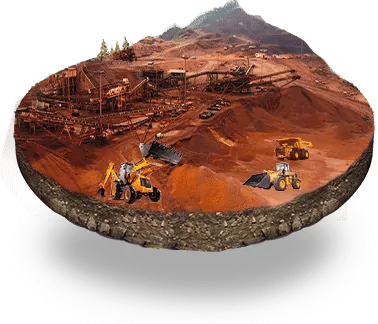
Most discussions around demurrage focus on container terminals. Yet, for bulk and breakbulk terminals, the operational challenge is often far more complex.
In fact, globally in the share of all maritime trade by volume, bulk cargo – mainly dry, liquid, breakbulk, has a significant lead (around 70-80 percent according to some estimates) over containerised cargo. As nations developed, their respective maritime movement of cargo has also seen an uptick in most contexts. Hence, metrices such as cargo dwell time, cost incurred per ton of cargo become key parameters to gauge the efficacy of port terminals that are in operation.
Cargo moves through an interconnected network of road transport, rail logistics, stockyards, cargo handling equipment, and marine operations. A delayed rake, an overloaded stockyard, a conveyor breakdown, or an unavailable ship loader can disrupt an entire vessel schedule.
For many terminal operators, demurrage is treated as an unavoidable operating expense. It is often the visible symptom of a much larger coordination problem. By the time a vessel or railway rake begins attracting demurrage, the operational disruption has already spread across the terminal.
As cargo volumes continue to grow and turnaround expectations become tighter, reducing demurrage is no longer about working faster. It is about enabling every stakeholder to make informed decisions from the same operational picture.
Demurrage Isn't the Real Problem
Demurrage is defined as the charge incurred when maritime vessels or railway rakes remain within a terminal beyond the agreed free time. Depending on commercial agreements, the cost may be borne by the shipping line, cargo owner, charterer, terminal operator, or railway authority. While the penalty is financial, its causes are almost always operational.
In bulk terminals, delays rarely originate from a single event. Cargo may leave the mine behind schedule, trucks may arrive faster than unloading capacity allows, or rakes may remain occupied because stockyards are already congested. Equipment failures involving wagon tipplers, conveyors, stacker reclaimers, or ship loaders can slow cargo movement further, while pending documentation or commercial approvals may delay vessel loading even after cargo is physically available.
By the time a demurrage invoice arrives, the disruption has already affected multiple parts of the terminal.
The Hidden Cost of Operational Disconnect
The true cost of demurrage extends well beyond contractual penalties.
A delayed rake can postpone stock replenishment. Reduced stock availability slows vessel loading. Extended loading occupies the berth longer than planned, forcing incoming vessels to wait. Meanwhile, trucks continue arriving, yard capacity tightens, equipment utilisation becomes inefficient, and cargo evacuation plans require constant revision. In a way, the entire process becomes hostage to this relatively invisible disconnect.
The financial consequences quickly multiply through higher fuel consumption, unproductive equipment hours, labour inefficiencies, schedule disruptions, and reduced customer confidence. Even after the immediate issue is resolved, restoring the original operating rhythm may take several shifts.
As terminals handle larger cargo volumes and tighter turnaround commitments, I've seen every hour of operational delay carry a greater cost to profitability and competitiveness.
Visibility Is What Keeps Operations Moving
The challenge facing many terminals today is not a shortage of information but a shortage of connected information.
Marine operations, rail logistics, stockyard management, gate operations, finance, and commercial teams often rely on separate systems and independent workflows. As updates move through spreadsheets, emails, and phone calls, valuable time is spent validating information instead of resolving operational issues.
Real-time visibility changes this dynamic.
When every department works from the same operational view, decisions become proactive rather than reactive. A change in vessel arrival can immediately trigger revised berth planning. Slower rake unloading can prompt adjustments to cargo sequencing before vessel loading is affected. Approaching stockyard capacity can lead to rescheduled cargo receipts before congestion develops.
These may look like small operational decisions. In my experience, they are exactly what prevents the chain of events that ultimately results in vessel demurrage, railway demurrage, and lower terminal productivity.
Building a Connected Terminal
Across the global port industry, operators are investing in digital technologies not simply to automate operations but to improve coordination. The objective is to create a connected operating environment where marine planning, cargo receipt, stockyards, rail logistics, commercial operations, finance, and equipment management function as one integrated ecosystem.
A modern Port Management System plays a central role in enabling this visibility. By connecting operational and commercial functions within a single platform, terminal operators gain a shared view of cargo movement, vessel readiness, equipment utilisation, resource availability, and operational constraints. This allows teams to identify bottlenecks earlier, coordinate resources more effectively, and respond before delays become costly.
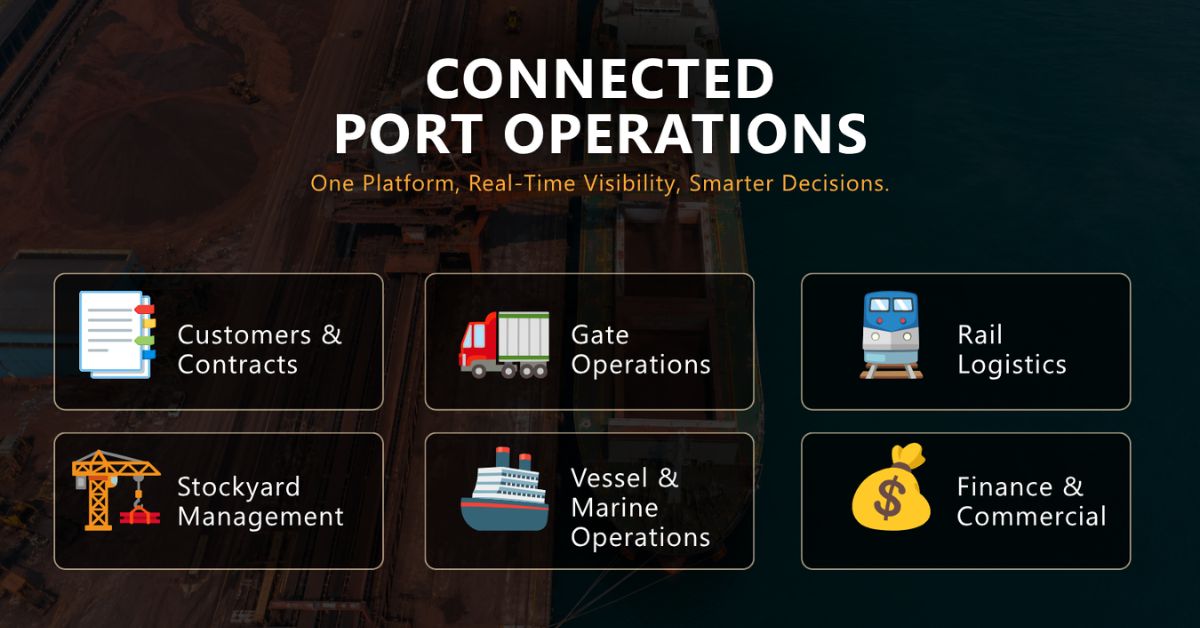 This is the philosophy I've pushed our teams to build around at CSM Technologies, and it has shaped every design decision behind CSM Portray, our integrated Port Management System for bulk ports and terminals. I didn't want another system that manages customer accounts, contracts, road and rail cargo receipt, vessel planning, stockyards, and finance in isolation. I wanted one platform operators could run the terminal from — where coordination is built in, not bolted on.
Looking Ahead
For bulk and breakbulk terminals, demurrage is rarely an isolated operational issue. More often, it reflects disconnected information, delayed coordination, and decisions made without complete operational visibility.
The future of terminal operations will not be defined by who owns the largest infrastructure, but by who can coordinate it most intelligently. As cargo volumes continue to increase, connected decision-making will become one of the strongest differentiators of operational performance.
Reducing demurrage begins long before a vessel reaches the berth or a railway rake exceeds its unloading window. It begins with giving every stakeholder the visibility to anticipate disruptions, coordinate resources, and act before delays become expensive.
At CSM Technologies, I believe the conversation around demurrage needs to move beyond penalties and toward operational visibility. Helping bulk terminals operate as one connected ecosystem is the future of port operations I'm building toward — efficient, resilient, and high-performing.
Originally published on LinkedIn by Alok. Read the article on LinkedIn and join the conversation.

Recent Publications


- Agriculture and Allied Services
- AgriTech
- Application Development
- Artificial Intelligence
- Blockchain
- COVID-19
- CSM Editorial
- Data Analytics
- Digital service
- Digital Transformation
- Education
- EduTech
- Emerging Technologies
- Enterprise Resource Planning
- Food Security
- Golden Records
- GovTech Solution
- Green Jobs
- Healthcare
- HR Analytics
- Hybrid Work Culture
- Independence Thought
- Industry 4.0
- Innovation
- IT Consulting
- Land & Industry
- Life@CSM
- Memory Lane
- Mines & Minerals
- Mining Technology
- Opinion Piece
- Precision Agriculture
- Smart City
- Social Listening
- Social Media
- Social Registry
- Super Apps
- Tourism
- User Experience
- Web 3.0
- Work Culture







We will verify and publish your comment soon.