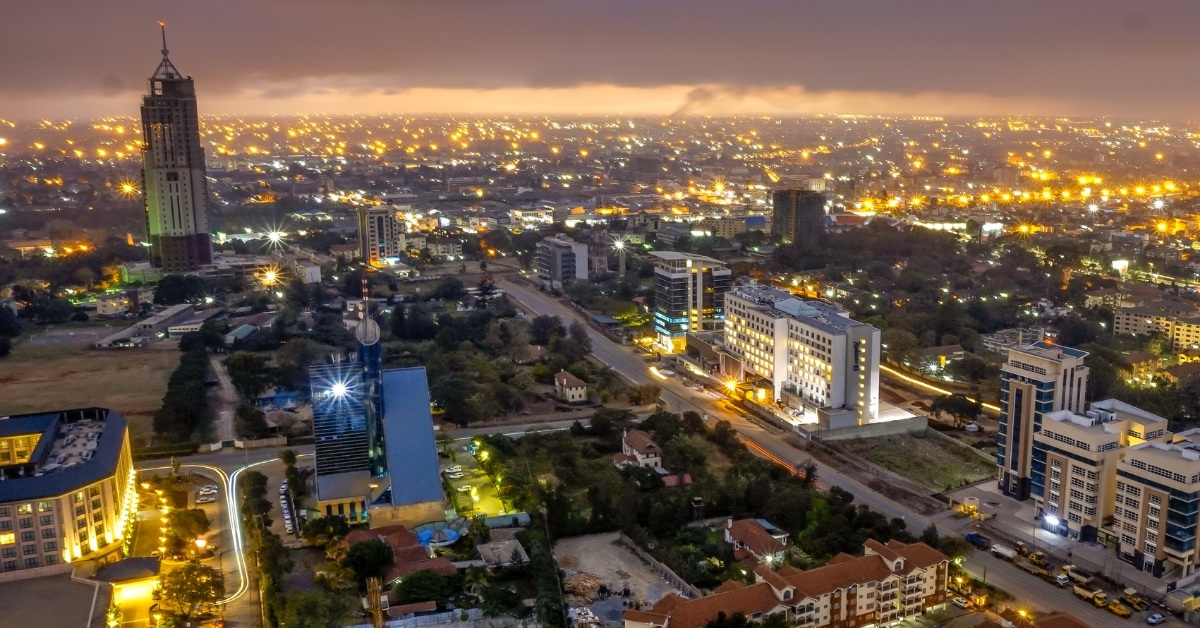


Urbanization is transforming economies across the globe at an unprecedented pace. Today, over 56% of the world’s population lives in urban areas, a figure projected to rise to 68% by 2050, according to the United Nations. Every week, nearly 3 million people migrate to cities, placing enormous pressure on land, infrastructure, housing, and public services. In response, countries across Europe, North America, and East Asia have adopted integrated land use planning systems, combining spatial planning, land administration, infrastructure development, and environmental safeguards into unified, digital platforms.
Globally, cities such as Singapore, Amsterdam, and Seoul leverage GIS-based planning tools, digital cadastral systems, and data-driven analytics to control urban sprawl, guide infrastructure investments, and align land use with long-term economic and climate goals. These systems enable governments to move from reactive planning to predictive, scenario-based urban management, ensuring that rapid growth does not compromise livability or resilience.
 (1).jpg)
Global vs. Africa: A Widening Urban Planning Gap
While global cities increasingly rely on digital land use planning frameworks, Africa is urbanizing faster than any other region, often without comparable planning capacity. Africa’s urban population is expected to grow from around 600 million today to more than 1.5 billion by 2050, with cities expanding at an annual rate of nearly 4%. Yet, fewer than 40% of African cities operate with updated land use plans, and even fewer have the digital systems required to enforce them effectively.
In developed regions, land use plans are updated every 5–10 years using real-time spatial data, integrated infrastructure models, and participatory digital tools. In contrast, many African cities still rely on outdated master plans, sometimes decades old, that fail to reflect current population growth, informal settlements, or infrastructure demand. This gap results in unplanned expansion, inefficient land allocation, rising disputes, and increasing vulnerability to environmental and climate-related risks.
 (1).jpg)
Why Integrated Land Use Planning Matters for Fast-Growing African Cities?
For fast-growing African cities, land use planning is not just a regulatory requirement; it is a strategic lever for economic growth, social equity, and environmental sustainability. Integrated planning ensures that land is allocated efficiently for housing, transport, industry, and green spaces, while digital tools provide real-time visibility into land availability and development patterns.
As demonstrated by Ethiopia’s UIIDP, digital planning platforms help cities reduce informal sprawl, lower infrastructure costs, and improve service delivery. They also strengthen climate resilience by protecting floodplains, ecological buffers, and critical infrastructure corridors. For citizens, transparent planning systems reduce disputes, improve tenure security, and create predictable urban development outcomes. In a continent where cities must absorb millions of new residents within short timeframes, integrated land use planning becomes the foundation for orderly, inclusive, and resilient urban expansion.
 (1).jpg)
Pain Points in Land Use Planning and Urban Expansion in Ethiopia
Ethiopia illustrates both the scale of Africa’s urbanization challenge and the urgency for reform. Although only about 20.4% of Ethiopia’s population currently lives in urban areas, the country is urbanizing at an estimated 4.1% annually, one of the highest rates in Sub-Saharan Africa. Cities such as Addis Ababa, Adama, Hawassa, and Mekelle are expanding rapidly due to population growth, rural-urban migration, and industrial development.
However, land use planning has struggled to keep pace. One of the most persistent challenges has been the fragmentation of urban governance systems, where land management, urban planning, finance, infrastructure development, and service delivery operate in silos. Manual and paper-based processes have slowed approvals, reduced transparency, and increased the risk of overlapping land allocations. Informal settlements have expanded on city peripheries, often encroaching on agricultural land and environmentally sensitive zones.
Limited access to reliable spatial data has constrained planners’ ability to anticipate growth or align infrastructure investments with future demand. Rising land values, combined with weak enforcement mechanisms, have also fueled land disputes and public mistrust. These challenges underscored the need for Ethiopia to move toward integrated, automated urban planning and land governance systems capable of managing growth at scale.
 (1).jpg)
CSM’s UIIDP in Ethiopia– Digitizing Urban Planning and Institutional Performance
To address the challenges of rapid and often unplanned urbanization, the Government of Ethiopia, through the Ministry of Urban Development and Construction, and with support from the World Bank, launched the Urban Institutional & Infrastructure Development Program (UIIDP) in 2022. Building on the earlier ULGDP I & II programs, UIIDP significantly scaled its reach from 44 to 117 cities, expanding population coverage and strengthening the institutional performance of Urban Local Governments (ULGs) nationwide. The program focuses on improving urban planning, infrastructure delivery, land management, and local economic development through performance-based governance and digital transformation.
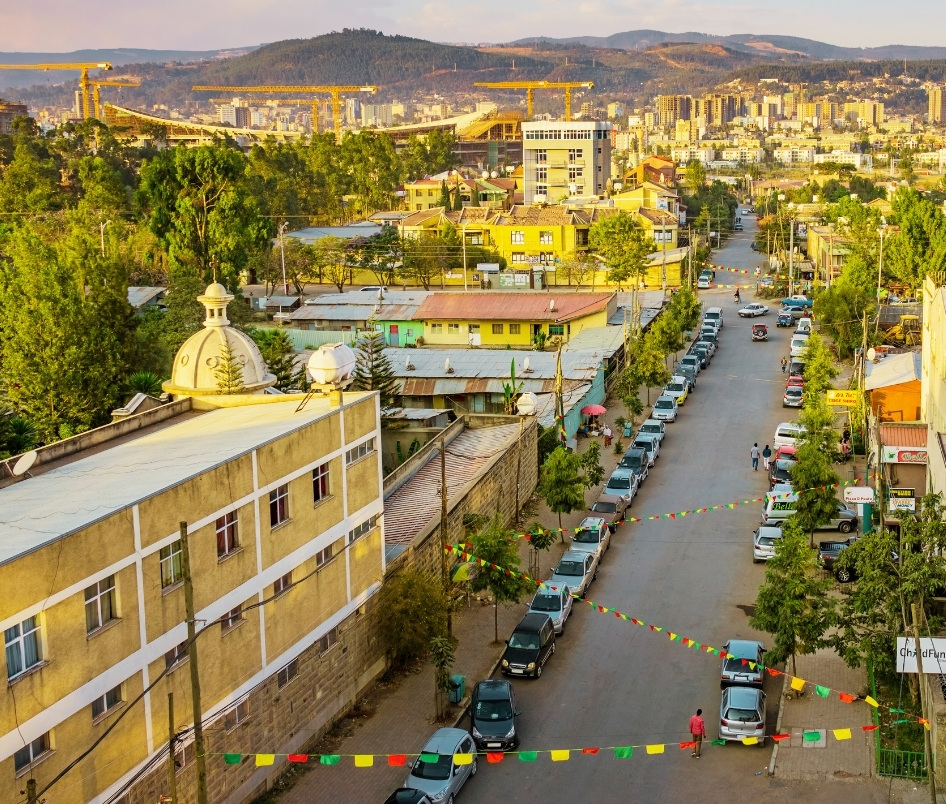
CSM Technologies was the technology partner who designed and implemented the UIIDP Management Information System (MIS)- an end-to-end digital platform integrating urban planning, land management, infrastructure development, finance, procurement, and service delivery. A key strength of the system lies in its GIS-enabled land management and urban planning modules, which allow planners to analyze land use, overlay population and infrastructure data, and generate alternative development scenarios. Comprising 16 core thematic modules and 4 support modules, the UIIDP MIS has significantly reduced processing times, streamlined approvals, improved inter-agency coordination, and strengthened accountability. Since 2022, the platform has recorded over 100 accepted digital submissions, reduced backlogs, and improved grievance redressal, demonstrating measurable gains in urban governance efficiency and planning effectiveness.
Conclusion and Way Forward
Africa’s urban future will be shaped not only by how fast cities grow, but by how effectively that growth is planned and governed. Ethiopia’s experience, from fragmented planning systems to the digitally integrated UIIDP, offers a powerful lesson for cities across the continent. With the right digital tools, institutional alignment, and policy commitment, rapid urbanization can be transformed from a challenge into an opportunity.
Adopting integrated, technology-enabled land use planning systems that connect spatial data, land administration, infrastructure planning, and service delivery. As demonstrated through UIIDP, such systems can strengthen governance, improve urban services, and support sustainable economic development at scale.
By partnering with governments to deliver robust digital public infrastructure, CSM Technologies is helping African cities plan smarter, grow sustainably, and build urban futures that are inclusive, resilient, and fit for generations to come.
We will verify and publish your comment soon.