


Work today does not happen in one place. It happens across applications, emails, meetings, dashboards, and conversations. This fragmentation slows decisions, creates silos, and reduces visibility. Slack is changing that. As a work operating system, Slack brings people, processes, and enterprise applications into one unified environment where work flows faster, decisions happen sooner, and teams stay aligned.
Organizations across North America are increasingly adopting Slack not just as a messaging tool but as a core digital workspace that powers productivity, collaboration, and intelligent operations.
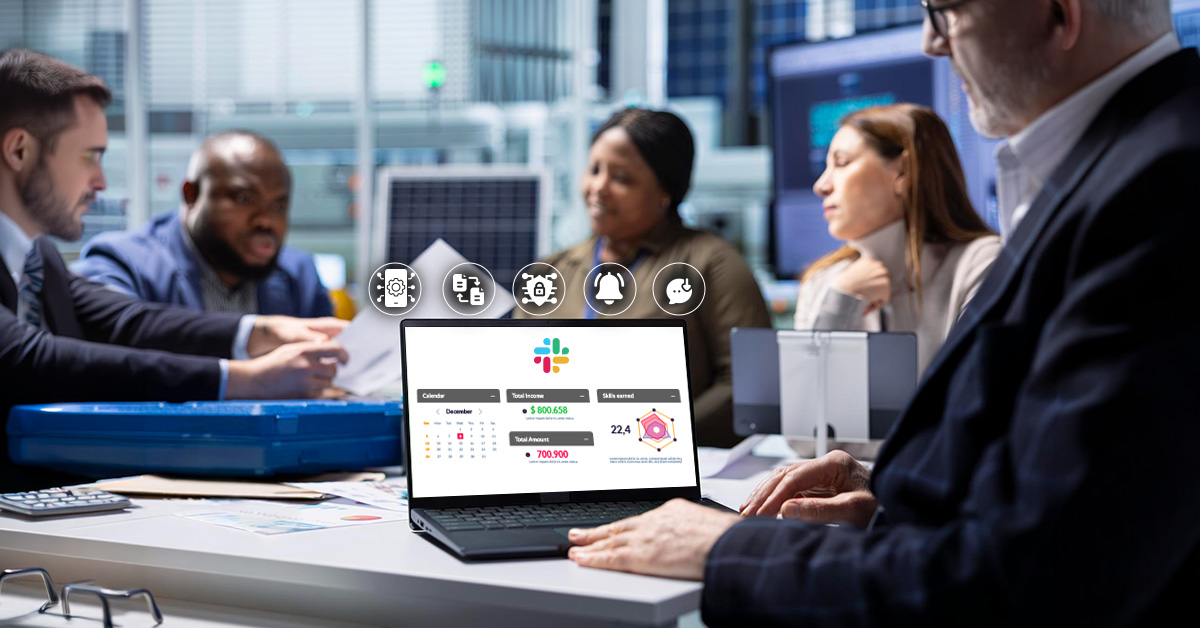
What Does Slack as a Work OS Really Mean
A work operating system is a digital foundation where teams communicate, automate workflows, and connect enterprise applications in one place. Slack serves as the central layer that connects systems, data, and people.
Instead of switching between tools, employees can work from Slack as their primary interface.
Slack enables organizations to:
- Centralize communication across teams, departments, and leadership
- Connect enterprise systems such as CRM, HR, service, and finance platforms
- Automate routine workflows and approvals
- Enable faster decision making through real time collaboration
- Provide leadership visibility into ongoing operations
This shift transforms Slack from a chat tool into a strategic platform for enterprise execution.
Breaking Down Silos and Accelerating Decisions
One of the biggest operational challenges organizations face is fragmented communication. Information is scattered across emails, meetings, and disconnected applications.
Slack solves this by organizing conversations into channels aligned to teams, projects, customers, or business functions.
This allows organizations to:
- Reduce email dependency
- Improve cross functional collaboration
- Maintain a searchable history of decisions and knowledge
- Enable faster response to business needs
Leaders gain a clearer view of how work progresses and where attention is needed.

Connecting Enterprise Applications Into One Workspace
Modern enterprises rely on multiple platforms such as CRM systems, HR platforms, analytics tools, and customer service solutions. Managing these systems separately slows execution.
Slack integrates directly with enterprise platforms, including those built on the Salesforce ecosystem, enabling teams to receive alerts, update records, and collaborate without leaving Slack.
This creates a connected digital workplace where:
- Sales teams receive real time customer updates
- Service teams resolve cases faster
- HR teams streamline employee workflows
- Leadership monitors business performance
Slack becomes the interface where business happens.
Automating Workflows and Increasing Productivity
Many enterprise processes still rely on manual coordination, approvals, and follow ups. Slack introduces workflow automation directly within the workspace.
Organizations can automate:
- Approval workflows
- Notifications and alerts
- Case escalations
- Task assignments
- Employee onboarding processes
This reduces delays, improves accountability, and allows employees to focus on high value work.
Enabling Real Time Visibility and Smarter Decision Making
Slack provides real time visibility into operations by connecting data and teams.
Leadership teams benefit from:
- Instant access to operational updates
- Faster issue resolution
- Improved coordination across departments
- Data driven decision making
Slack transforms communication into an intelligent operational layer.
Slack and the Future of Digital Enterprises
As organizations move toward digital first operations, Slack plays a central role in enabling connected, intelligent, and agile workplaces.
Combined with platforms such as Salesforce, Slack becomes even more powerful by embedding customer data, workflows, and collaboration directly into daily work.
This enables organizations to move from reactive communication to proactive execution.
Business Impact of Slack as a Work OS
Organizations adopting Slack as a work operating system experience measurable benefits
- Faster decision making
- Improved employee productivity
- Reduced operational friction
- Better customer responsiveness
- Stronger organizational alignment
Slack enables enterprises to operate with speed and intelligence.
Enabling Slack Powered Digital Workplaces
As organizations embrace Slack as part of their digital transformation strategy, successful adoption requires thoughtful integration, governance, and alignment with enterprise systems.
At CSM Tech, we work with enterprises and public sector organizations to design and enable connected digital workplaces powered by modern collaboration platforms aligned with enterprise ecosystems such as Salesforce.
Our focus is helping organizations unlock the full value of intelligent, connected work environments.
The Bottom Line
Slack is no longer just a collaboration tool. It is a work operating system that connects people, applications, and workflows.
Organizations that adopt Slack as a strategic platform are building faster, smarter, and more connected enterprises.
The future of work is not about more tools. It is about bringing work together in one place.

Want to start a project?
Get your Free ConsultationOur Recent Blog Posts

















































































































































© 2026 CSM Tech Americas All Rights Reserved