


Introduction
Public sector agencies are under increasing pressure to deliver faster, more transparent, and citizen-friendly services. From handling service requests and grievances to managing complex workflows, the volume and complexity of cases continue to grow.
Many agencies still rely on fragmented systems and manual processes. The result is delayed responses and limited visibility.
Digital case management provides a path forward by enabling structured, efficient, and scalable service delivery.
.jpg)
What is Case Management?
Case management refers to the structured process of handling requests, issues, or interactions from initiation through resolution.
In a public sector context, a “case” can represent:
- A citizen’s complain or grievance
- A service request such as permits or licenses
- An internal workflow requiring approvals
- Incident tracking for public services or infrastructure
Effective case management ensures that every request is:
- Captured accurately
- Routed to the right team
- Tracked in real time
- Resolved within defined timelines
At its core, case management is about bringing consistency, accountability, and visibility into how services are delivered.
Why Public Sector Agencies Need a Digital Case Management?
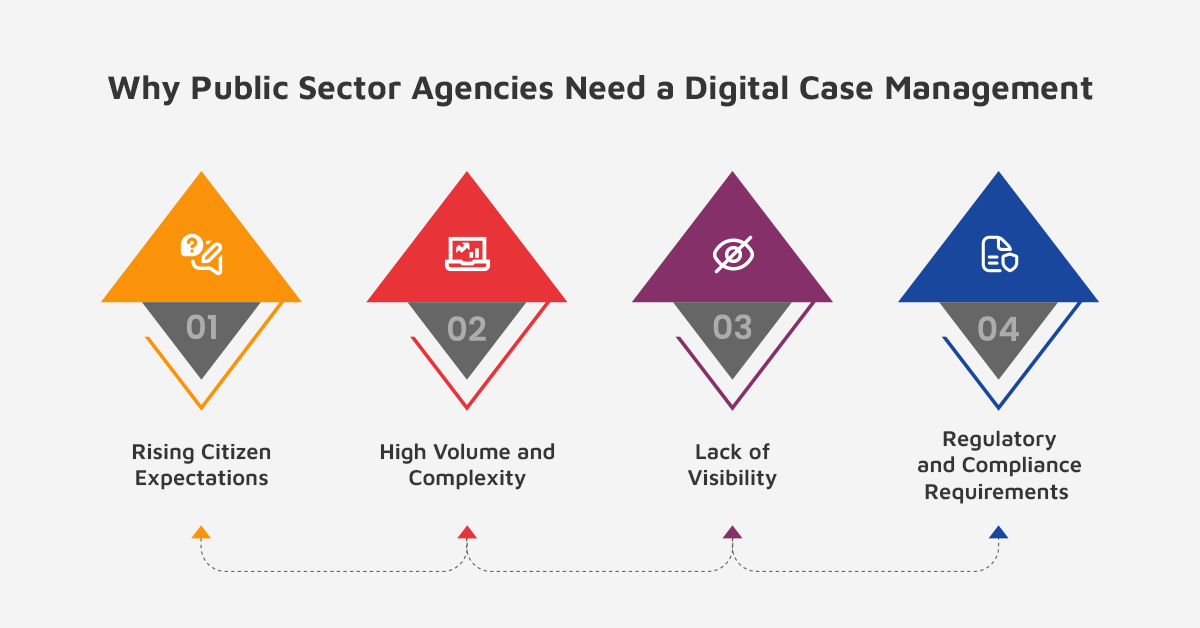
Traditional approaches to case handling often struggle to keep pace with today’s expectations.
- Rising Citizen Expectations: Citizens expect the same level of responsiveness from government services as they do from private sector platforms. Delays and lack of communication quickly erode trust.
- High Volume and Complexity: Agencies manage thousands of cases across departments, often with varying priorities and dependencies. Without a unified system, coordination becomes difficult.
- Lack of Visibility: In many cases, neither the citizen nor the agency has a clear view of case status, ownership, or timelines. This leads to inefficiencies and repeated follow-ups.
- Regulatory and Compliance Requirements: Public sector processes must adhere to strict policies, timelines, and audit requirements. Manual systems make compliance difficult to enforce consistently.
These challenges highlight the need for a centralized, scalable, and intelligent case management approach.
How Salesforce Enables Digital Case Management
Salesforce provides a robust platform for building and managing case workflows at scale. Its flexibility and integration capabilities make it particularly well-suited for public sector use cases.
- Centralized Case Capture: Cases can be captured from multiple channels including web portals, email, call centers, and mobile applications. This ensures that all citizen interactions are recorded in a single system, eliminating duplication and improving data accuracy.
- Automated Case Routing: Cases can be automatically assigned based on predefined rules such as department, priority, or location. This reduces manual intervention and ensures that cases are directed to the right teams from the start.
- Real-Time Case Tracking: Both internal teams and citizens can track the status of cases in real time. This transparency reduces uncertainty and improves communication between agencies and citizens.
- Workflow Automation: Routine tasks such as approvals, escalations, and notifications can be automated. This helps agencies reduce processing time while maintaining consistency in execution.
- Service Level Management: Agencies can define service level agreements and monitor compliance through dashboards and alerts. This ensures accountability and helps maintain performance standards.
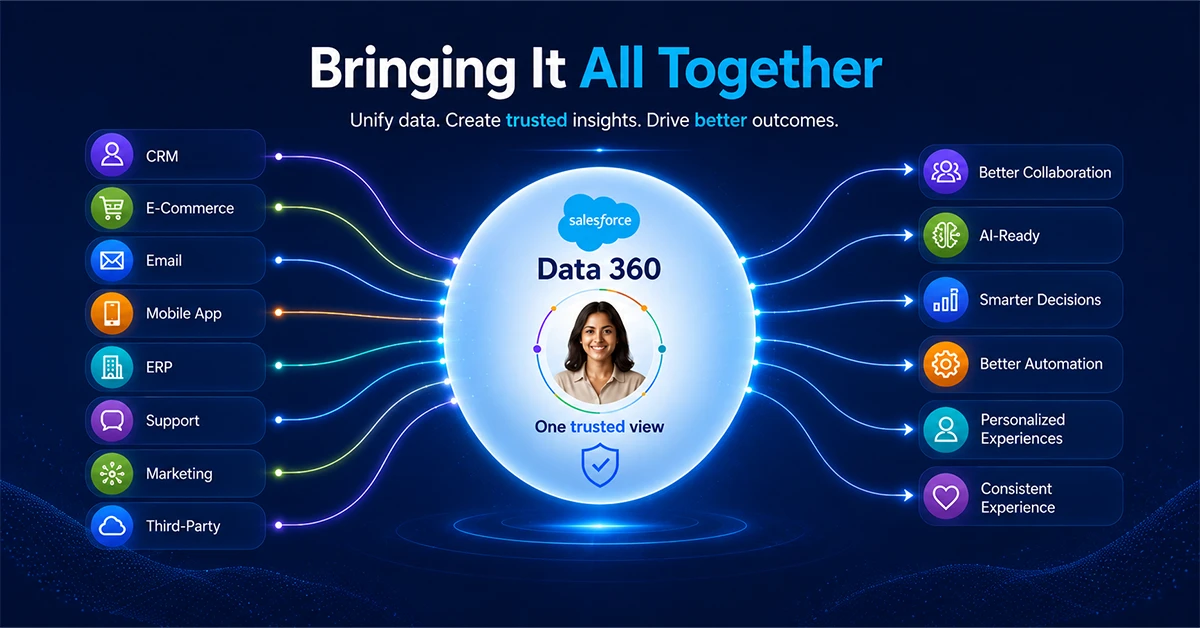
- Integrated Data and Systems: Salesforce integrates seamlessly with other systems such as ERP, GIS, and document management platforms. This enables a unified view of data, supporting better decision-making and coordination across departments.
Use Cases of Digital Case Management Across Public Sector
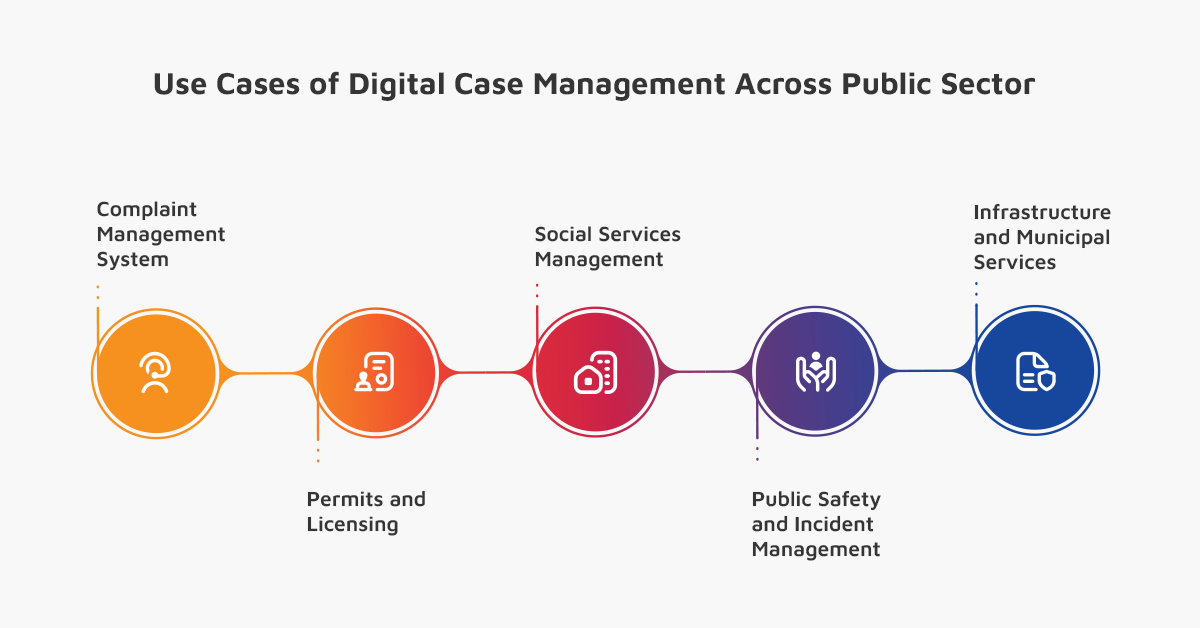
- Complaint Management System: A centralized system captures complaints across channels and assigns clear ownership with defined timelines. Real-time tracking and automated escalations improve resolution speed while ensuring accountability. This helps agencies build transparency and trust with citizens.
- Permits and Licensing: Case management streamlines application intake, review, and approvals through structured workflows. Automated routing ensures the right teams handle each request without delays. This reduces processing time and improves consistency in service delivery.
- Social Services Management: Agencies can track beneficiary data, eligibility, and service delivery in one system. This improves coordination across programs and reduces duplication of effort. It also ensures timely and accurate delivery of benefits.
- Public Safety and Incident Management: Incidents can be logged, assigned, and tracked in real time across teams. This improves coordination and ensures faster response and resolution. Agencies gain better control over complex, time-sensitive situations.
- Infrastructure and Municipal Services: Service requests such as maintenance or utilities can be tracked with clear ownership and timelines. Automated workflows ensure timely resolution and reduce backlog. This improves responsiveness and overall service quality.
Key Benefits of Public Sector Case Management Solution
- Improved Efficiency: Automation reduces manual tasks like routing, updates, and follow-ups. Teams can handle higher volumes with faster turnaround times. This leads to better resource utilization and operational productivity.
- Enhanced Transparency: Real-time case tracking provides visibility into status, ownership, and timelines. Citizens and agencies both benefit from clearer communication. This strengthens accountability across the system.
- Better Citizen Experience: Faster responses and consistent communication improve overall service interactions. Citizens stay informed throughout the process, reducing frustration. This directly impacts trust and satisfaction.
- Data-Driven Decision Making: Dashboards and analytics provide insights into trends, bottlenecks, and performance. Agencies can make informed decisions and continuously improve processes. This shifts operations from reactive to proactive.
- Scalability: Scalable digital platforms can handle increasing case volumes without performance issues. Agencies can maintain service quality during peak demand. This ensures long-term sustainability.
Features of a Digital Case Management Framework
A strong case management solution is built on capabilities that enable both operational efficiency and citizen-centric service delivery.
- Omnichannel Case Capture: Cases can be created from portals, email, call centers, and mobile apps. This ensures no request is missed and all interactions are recorded in one system. It creates a consistent intake experience for citizens.
- Automated Workflows and Routing: Rules-based automation ensures cases are assigned to the right teams instantly. This reduces delays and eliminates manual dependency. It also ensures consistency in how cases are handled.
- Real-Time Case Visibility: Teams and citizens can track case progress at every stage. This reduces follow-ups and improves communication. It also helps agencies manage service level commitments.
- Service Level Management: Defined SLAs help agencies monitor timelines and performance. Alerts and escalations ensure delays are addressed proactively. This improves accountability and compliance.
- Integration with Enterprise Systems: Case management platforms integrate with systems like ERP, GIS, and document management. This provides a unified view of data across departments. It enables better coordination and decision-making.
These capabilities can be configured and implemented on platforms like Salesforce based on the specific needs of public sector organizations, ensuring flexibility and scalability.
Conclusion
Case management is critical to modern public service delivery. By adopting scalable and intelligent solutions, agencies can improve efficiency, transparency, and citizen experience.
Organizations can leverage platforms like Salesforce to build tailored case management systems aligned to their needs.
Connect with us to explore how we can help implement case management solutions for your organization.

Want to start a project?
Get your Free ConsultationOur Recent Blog Posts



















































































































































© 2026 CSM Tech Americas All Rights Reserved