



















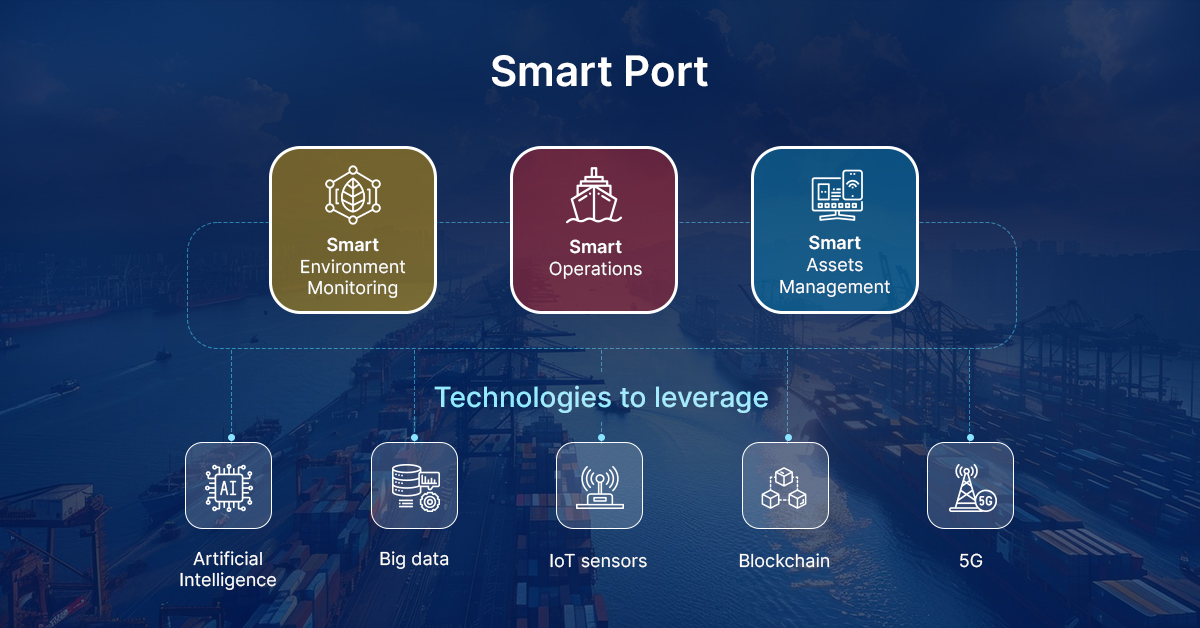
For years, the maritime industry has celebrated the rise of smart ports- AI-enabled cranes, autonomous vehicles, digital documentation, and automated container yards. Yet beneath this wave of innovation lies an inconvenient truth: the world's bulk terminals are still being managed with intelligence designed for containers, not commodities.
It's like using an airport traffic control system to manage a river. Both move things. Neither behaves the same.
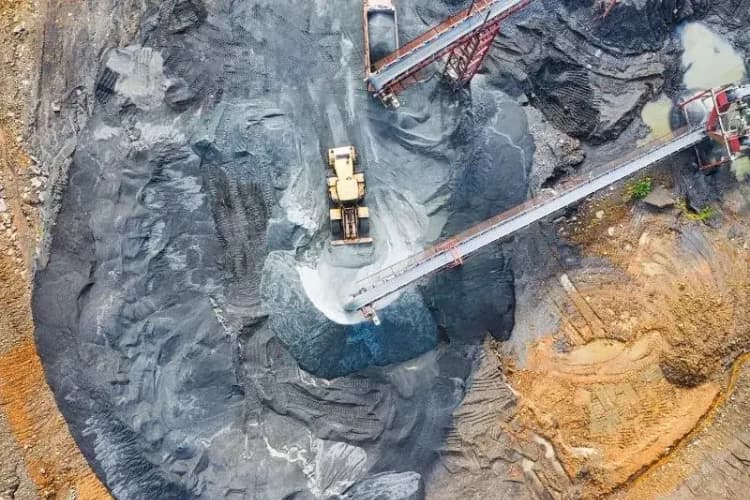
Bulk terminals handling coal, iron ore, grain, fertilizers, cement, petroleum products, and chemicals operate in an environment governed not by standardized boxes but by physics, weather, material behavior, and interconnected machinery. In this ecosystem, digital transformation cannot stop at automation. It demands Unified Digital Intelligence.
.jpg)
The Hidden Blind Spot in Smart Port Strategies
According to the United Nations Conference on Trade and Development (UNCTAD), nearly 80% of global trade by volume moves through maritime transport. A substantial share comprises dry and liquid bulk commodities that fuel industries, power economies, and feed populations.
Ironically, most smart port investments have focused on container terminals because containers are predictable. Every TEU is standardized. Every move is trackable. Every workflow follows defined sequences.
Bulk cargo behaves differently.
Coal absorbs moisture. Grain deteriorates with humidity. Iron ore changes density. Fertilizers react to environmental conditions. Conveyor belts, stacker-reclaimers, hoppers, silos, and ship loaders function as one continuous ecosystem where the failure of a single component can bring an entire terminal to a standstill.
This is not a software challenge alone. It is a systems intelligence challenge.
Intelligence That Thinks Like the Terminal
Traditional automation tells machines what to do.
Unified Digital Intelligence enables the terminal to understand what is happening, why it is happening, and what should happen next.
Imagine the terminal functioning like a living nervous system.
Thousands of IoT sensors continuously monitor conveyor temperatures, equipment vibration, stockpile volumes, cargo moisture, wind speeds, dust concentration, and vessel schedules. Artificial Intelligence (AI) transforms these millions of data points into operational decisions in real time. This closed-loop cycle- Perception, Analysis, Decision, and Execution allows operations to self-adjust before disruptions escalate.
Instead of discovering a conveyor failure after production stops, predictive models detect mechanical stress days in advance. Rather than reacting to cargo degradation, operators proactively adjust storage strategies based on weather forecasts and sensor data.
According to McKinsey, AI-powered predictive maintenance can reduce maintenance costs by up to 30% while decreasing equipment downtime by 30–50%. For bulk terminals where every idle hour translates into lost throughput and demurrage costs, the impact is transformational.
Why Digital Twins Are Becoming Operational Command Centres
One of the most powerful innovations reshaping bulk logistics is the Digital Twin.
Rather than simply visualizing assets, a digital twin creates a virtual replica of terminal operations that simulates material flow, equipment utilization, storage behavior, and vessel movement before physical execution.
Operators can model how a specific grade of iron ore will stack, predict pile stability, estimate dust propagation during high winds, or optimize ship loading sequences without moving a single tonne of cargo.
The World Bank increasingly recognizes digital transformation and intelligent logistics as critical enablers for resilient global trade infrastructure. Likewise, Boston Consulting Group (BCG) identifies digitalization as essential for improving operational resilience, sustainability, and competitiveness across modern ports.
The result is a decisive shift- from reactive firefighting to predictive decision-making.
Breaking the Silos That Slow the Supply Chain
Perhaps the biggest inefficiency in bulk terminals isn't outdated machinery.
It's disconnected information.
Operations, maintenance, inventory, vessel planning, environmental compliance, energy management, and commercial contracts often operate as isolated systems. One team optimizes machinery while another negotiates charter agreements with little synchronization between them.
Unified Digital Intelligence eliminates these silos.
By integrating operational technology (OT) with enterprise systems (IT), terminals can synchronize cargo readiness, berth allocation, equipment availability, inventory levels, and charter-party obligations into a single decision framework.
This means fewer demurrage charges, optimized energy consumption, better asset utilization, enhanced safety, and significantly improved customer service.
The terminal evolves from a collection of machines into an intelligent operating ecosystem.
.jpg)
CSM’s Port Management Solution (PMS): Connecting Every Link in the Bulk Cargo Value Chain
In today’s high-volume bulk cargo ecosystem, operational excellence can no longer be achieved through disconnected applications and manual coordination. While smart port initiatives have improved automation, bulk terminals now require something more powerful: Unified Digital Intelligence. This is where CSM Technologies’ Port Management System (PMS) delivers transformational value.
CSM goes beyond conventional port digitization by creating a single, integrated operational backbone that seamlessly connects vessel nomination, berth allocation, marine operations, yard inventory, gate management, cargo handling, invoicing, and stakeholder coordination. Instead of relying on fragmented software and spreadsheets, terminal operators gain a real-time, data-driven command centre that enhances visibility across every touchpoint of the cargo lifecycle.
A key differentiator of the CSM solution is its ability to eliminate revenue leakages through automated invoicing, accurate demurrage tracking, and optimized equipment utilization. Simultaneously, intelligent yard inventory management provides real-time stock visibility, reducing operational bottlenecks and improving cargo throughput. By leveraging AI, IoT, machine learning, and predictive analytics, the platform enables proactive decision-making, efficient resource deployment, and enhanced berth productivity.
Designed for seamless integration with enterprise systems such as SAP and other ERP platforms, CSM’s PMS ensures uninterrupted data exchange across commercial, operational, and financial functions.
The result is a future-ready bulk terminal that is smarter, more agile, and significantly more profitable. With CSM’s solution, ports do not just become digital; they become intelligent, connected, and performance-driven ecosystems built for sustained growth.
Beyond Smart Ports Lies Cognitive Ports
The next generation of ports will not be defined by how many automated cranes they deploy.
They will be defined by how intelligently every asset, sensor, contract, and operational decision communicates with one another.
Container terminals taught the maritime industry how to automate movement.
Bulk terminals will teach it how to orchestrate intelligence.
As global trade becomes increasingly volatile, climate risks intensify, and supply chains demand greater resilience, Unified Digital Intelligence will become the operating philosophy that separates industry leaders from followers.
The future belongs not to ports that are merely smart but to terminals that can sense, think, predict, and adapt as one unified digital enterprise.
Call to Action
If your bulk terminal still relies on fragmented software, disconnected operational data, or reactive maintenance strategies, now is the time to rethink your digital roadmap. Investing in unified AI platforms, digital twins, predictive analytics, and integrated terminal operating systems is no longer a technology upgrade, it is a strategic imperative. The ports that embrace unified digital intelligence today will define the benchmarks for efficiency, sustainability, and resilience in tomorrow's global maritime economy.


Recent Publications


- Agriculture and Allied Services
- AgriTech
- Application Development
- Artificial Intelligence
- Blockchain
- COVID-19
- CSM Editorial
- Data Analytics
- Digital service
- Digital Transformation
- Education
- EduTech
- Emerging Technologies
- Enterprise Resource Planning
- Food Security
- Golden Records
- GovTech Solution
- Green Jobs
- Healthcare
- HR Analytics
- Hybrid Work Culture
- Independence Thought
- Industry 4.0
- Innovation
- IT Consulting
- Land & Industry
- Life@CSM
- Memory Lane
- Mines & Minerals
- Mining Technology
- Opinion Piece
- Precision Agriculture
- Smart City
- Social Listening
- Social Media
- Social Registry
- Super Apps
- Tourism
- User Experience
- Web 3.0
- Work Culture














We will verify and publish your comment soon.