








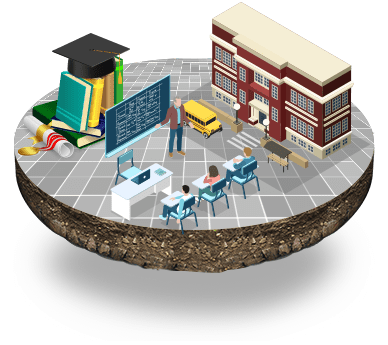












For generations, getting into college in India meant navigating a maze of application forms, deadlines, fees and paperwork. Today, digital platforms are transforming this stressful rite of passage into a more connected, transparent and student-centric experience. The real revolution, however, is not paperless admissions. It is making opportunity less dependent on geography and privilege.
India’s Digital Public Infrastructure (DPI) is reshaping how students access higher education, with platforms such as Common University Entrance Test (CUET), Student Academic Management System (SAMS) in Odisha and Tamil Nadu Engineering Admissions (TNEA), simplifying admission processes.
.webp)
How Digital College Admission Platforms Are Changing the Game
One application, wider access: The CUET alongside participating universities’ admission systems, helps students navigate a common entrance process and reduces the burden of multiple application journeys.
Centralized, transparent allocation: Delhi University’s Common Seat Allocation System (CSAS) enables preference filling and seat allocation through a digital interface, making the admission journey easier to track.
State-level innovation: SAMS Odisha and Tamil Nadu’s TNEA demonstrate how centralized portals can connect applicants with multiple institutions through structured workflows.
Less paperwork, faster verification: DigiLocker and the Academic Bank of Credits (ABC) ecosystem can support secure access to academic records and more efficient verification, subject to institutional integration.
More informed decisions: Digital dashboards and timely notifications help students track applications, deadlines and admission status without repeatedly chasing institutions.
Yet, digitization is not synonymous with democratization. A portal may eliminate queues while creating new barriers for students with unreliable internet access, limited digital literacy or little guidance during preference filling. Technical failures during high-pressure admission windows can also turn convenience into anxiety.
Algorithmic allocation deserves equal scrutiny. Transparent rules, accessible grievance redressal and human oversight are essential to ensure technology supports merit rather than obscuring decisions behind automated processes. Smaller institutions also need investment in infrastructure, staff training and data protection.
.webp)
How CSM Technologies Is Transforming College Admissions
India’s higher education system needs more than digital application forms. It needs an integrated, transparent and scalable admission ecosystem that connects students, institutions and administrators. The SAMS developed by CSM Technologies brings this vision to life by transforming fragmented admission processes into a unified, student-centric digital experience.
The impact is reflected in SAMS Odisha, a recipient of the prestigious SKOCH Platinum Award recognising the platform’s contribution to digital governance and streamlined admission management. Alongside initiatives such as Online Facilitation System for Students (OFSS) Bihar CSM brings experience in managing complex, high-volume admission workflows across diverse educational institutions and geographies.
Key capabilities and benefits include:
Common Application Form (CAF): A unified application process allows students to apply to multiple institutions through a common digital gateway, reducing paperwork and repetitive data entry.
Centralised Merit and Seat Allocation: Configurable merit lists, preference-based counselling, reservation rules and automated seat allocation help improve transparency, consistency and administrative efficiency.
Digital Document Verification: Structured verification workflows help reduce manual intervention, processing delays and the risk of discrepancies.
Real-Time Student Communication: Mobile-friendly interfaces, dashboards and automated SMS notifications keep applicants informed about deadlines, merit status, allotments and payments.
End-to-End Admission Management: Integrated workflows support enrolment, student record creation, fee collection and subsequent academic administration.
Scalable Digital Architecture: Centralised systems help education authorities manage large applicant volumes while strengthening operational visibility and data-led decision-making.
For governments and education departments, the opportunity extends beyond faster admissions. It is about reducing administrative friction, strengthening public trust and making access to higher education more transparent and inclusive.
.webp)
Beyond Convenience: Building an Inclusive Admissions Future
The National Education Policy (NEP) 2020 envisages a more flexible, multidisciplinary higher education system. Interoperable academic records and platforms such as Automated Permanent Academic Account Registry (APAAR) and ABC could help support this ambition, but seamless admissions will depend on reliable integration, responsible data governance and institutional readiness.
For technology providers, governments and universities, the priority must be to build admission systems that are resilient, inclusive and easy to navigate.
The future of college admissions should not be measured by how many forms disappear, but by how many deserving students gain access. Governments and institutions must invest in student-first digital platforms that turn administrative simplicity into educational opportunity. One form can simplify the journey; an inclusive system can change the future.


Recent Publications






- Agriculture and Allied Services
- AgriTech
- Application Development
- Artificial Intelligence
- Blockchain
- COVID-19
- CSM Editorial
- Data Analytics
- Digital service
- Digital Transformation
- Education
- EduTech
- Emerging Technologies
- Enterprise Resource Planning
- Food Security
- Golden Records
- GovTech Solution
- Green Jobs
- Healthcare
- HR Analytics
- Hybrid Work Culture
- Independence Thought
- Industry 4.0
- Innovation
- IT Consulting
- Land & Industry
- Life@CSM
- Memory Lane
- Mines & Minerals
- Mining Technology
- Opinion Piece
- Precision Agriculture
- Smart City
- Social Listening
- Social Media
- Social Registry
- Super Apps
- Tourism
- User Experience
- Web 3.0
- Work Culture

















We will verify and publish your comment soon.