




















For many decades, governments built digital services the way cities built office blocks- one department, one portal, one lock and key at a time. Citizens became keychains, proving who they were over and over at every door. That era is ending. Identity is no longer a login or a laminated card in a drawer. It is becoming a load-bearing wall in the architecture of the state- as invisible and indispensable as the electric grid humming beneath a city that never thinks to thank it.
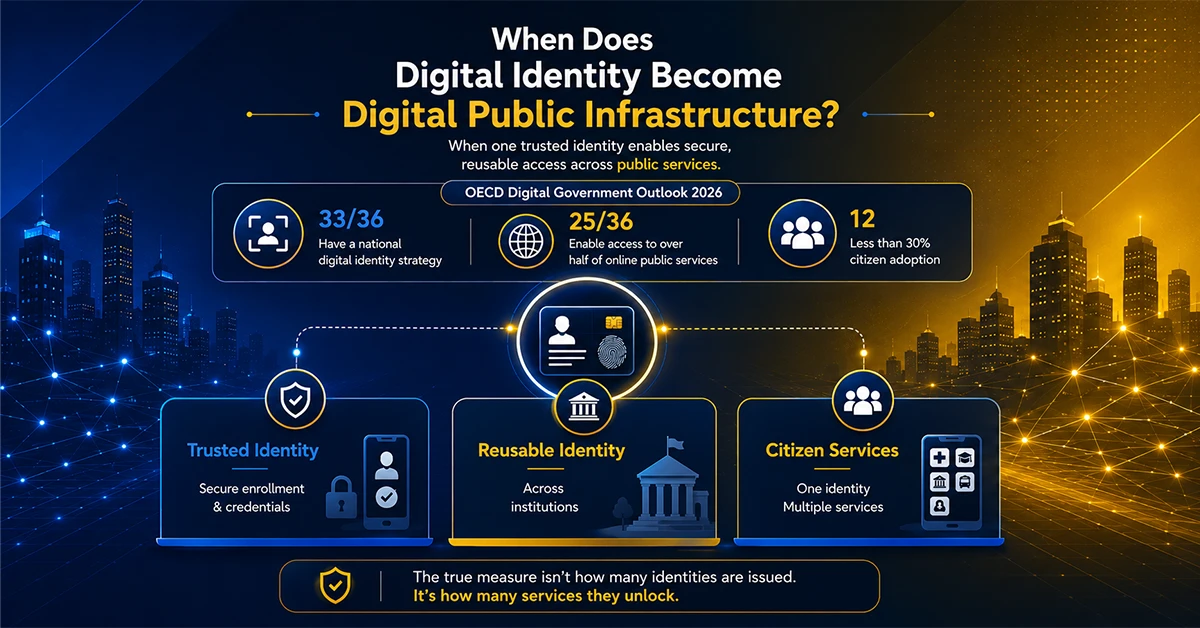
From Portals to Fabric
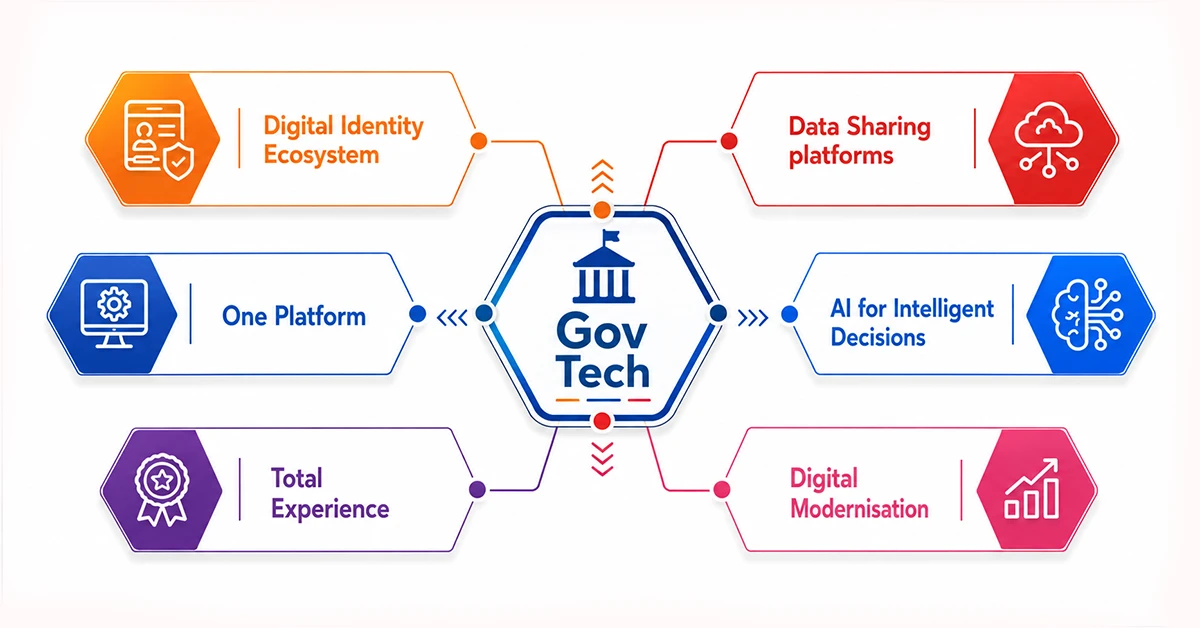
GovTech has moved through three waves.
Wave 1- Digitization: Moved paper forms online.
Wave 2- Integration: Got departments talking to each other.
Wave 3- Transformation: This is where we stand now: identity as a reusable, cross-cutting fabric that recognizes a citizen once and carries that recognition everywhere.
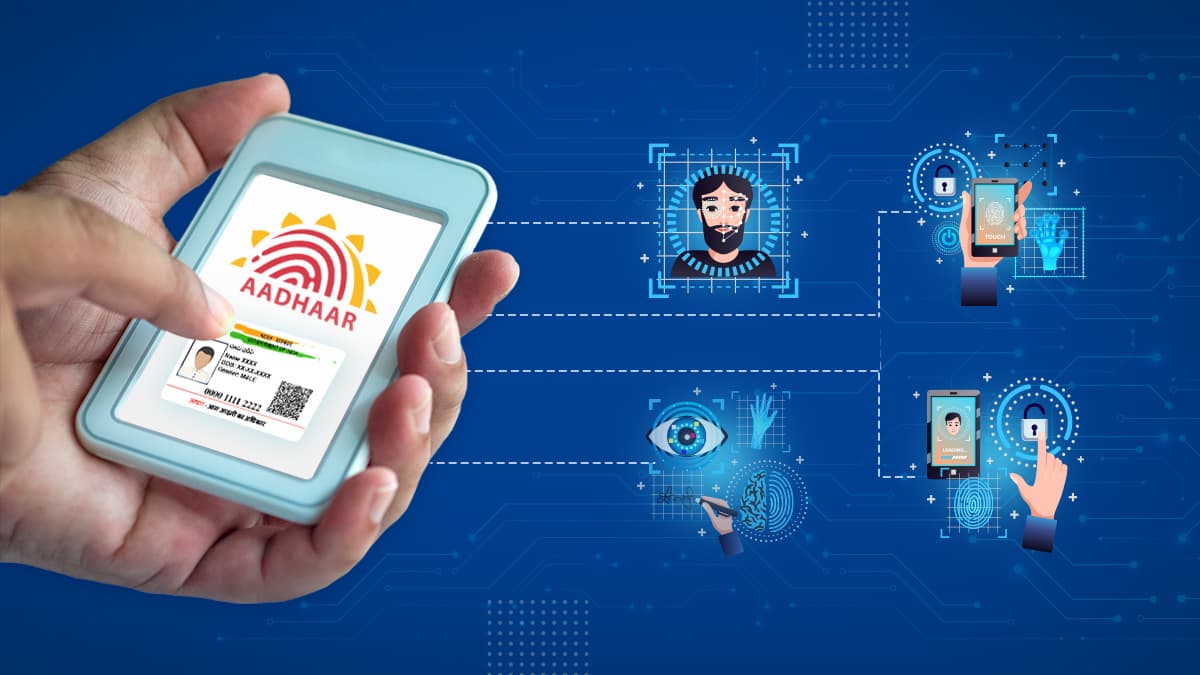
This isn't theory — it's running at national scale. India's Aadhaar has issued over 1.4 billion digital identities, powering roughly 80-96 million daily authentications and anchoring the India Stack alongside UPI and DigiLocker; its Direct Benefit Transfer (DBT) system has saved over Rs 3.48 lakh crore by eliminating ghost beneficiaries.
Singapore's Singpass serves 97% of eligible residents, enabling 41 million-plus monthly transactions across 2,700+ services. Estonia's X-Road saves an estimated 2,500-plus years of working time annually for a country of 1.3 million.
The World Economic Forum (WEF) pegs the global GovTech market at $606 billion in 2024, heading toward $1.42 trillion by 2034, unlocking $9.8 trillion in public value.
Three Pillars Holding the Weight
Interoperability turns identity into connective tissue rather than a destination — verify once, reuse everywhere, the way a standardized railway gauge lets every train use the same track. Zero Trust retires the old castle-and-moat model; with services everywhere, verification must be continuous, not granted once at the gate. Self-sovereign identity is the most radical shift — from "give me your data" to "prove your eligibility, keep your data." The EU's Digital Identity Wallet, rolling out under eIDAS 2.0 to reach hundreds of millions of citizens by 2026, exemplifies this selective-disclosure future: proving you're over eighteen without revealing your birth date.
How CSM Technologies is Architecting the Trust Layer of Modern Governance
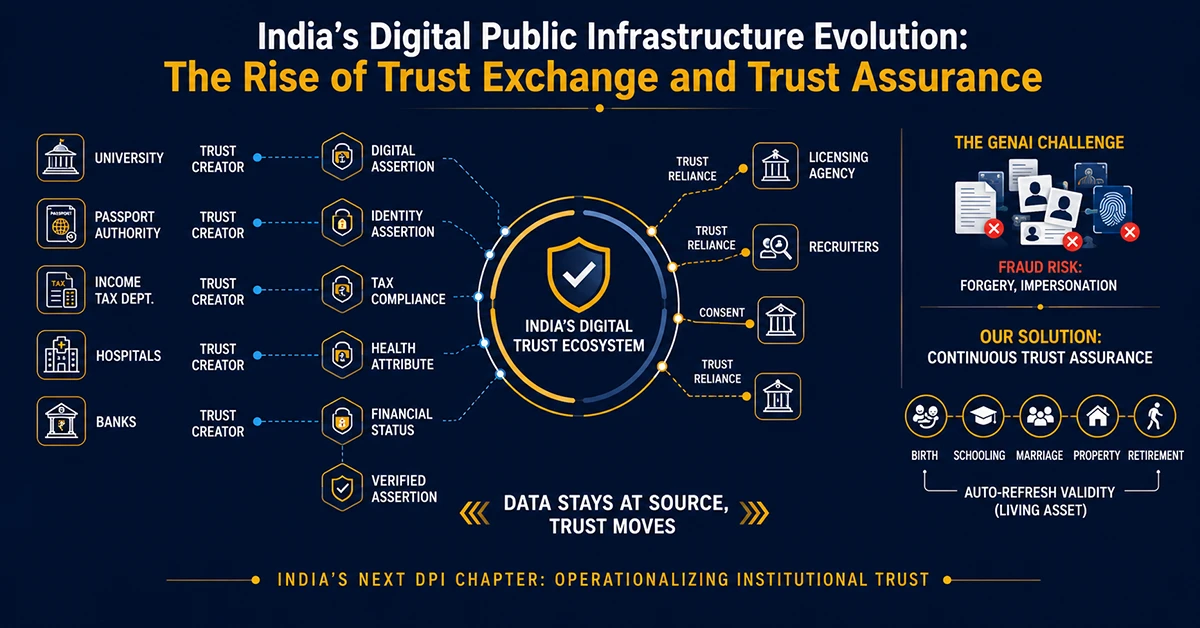
As governments worldwide transition from digitizing services to building Digital Public Infrastructure (DPI), identity is emerging as the foundational trust layer that connects citizens, institutions, and services. This is precisely where CSM Technologies is creating transformative impact.
With nearly three decades of GovTech expertise, CSM has moved beyond viewing identity as a mere authentication tool. Instead, it architects identity-driven ecosystems that enable secure, seamless, and citizen-centric governance. Our approach is rooted in a simple yet powerful belief: citizens should not have to repeatedly prove who they are; systems should intelligently and securely recognize them.
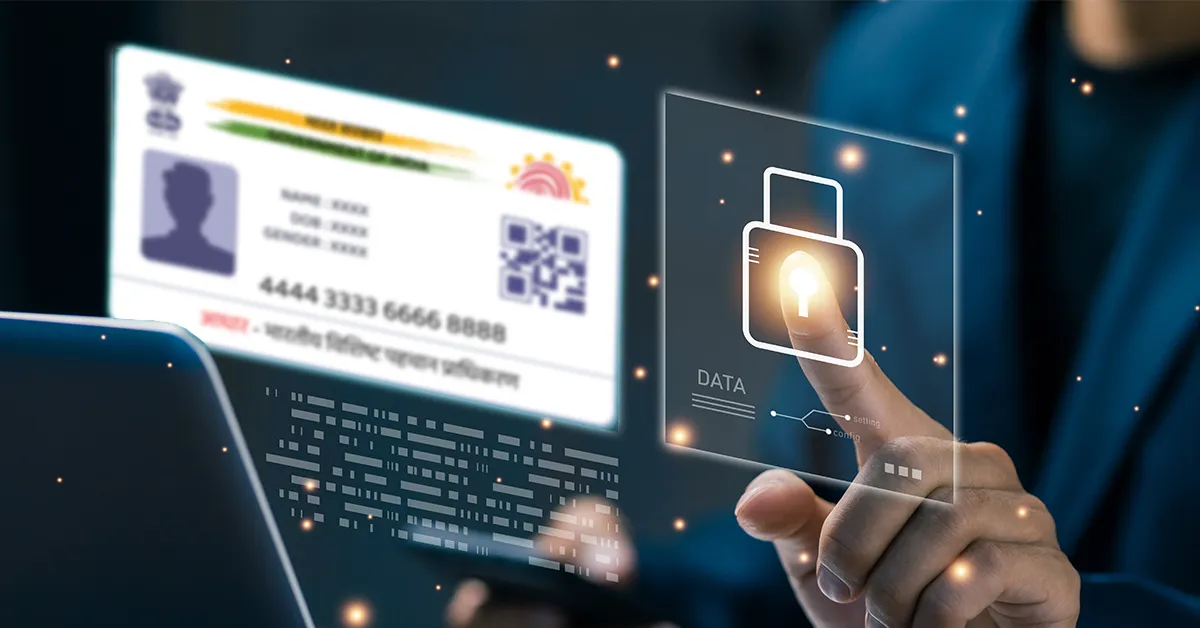
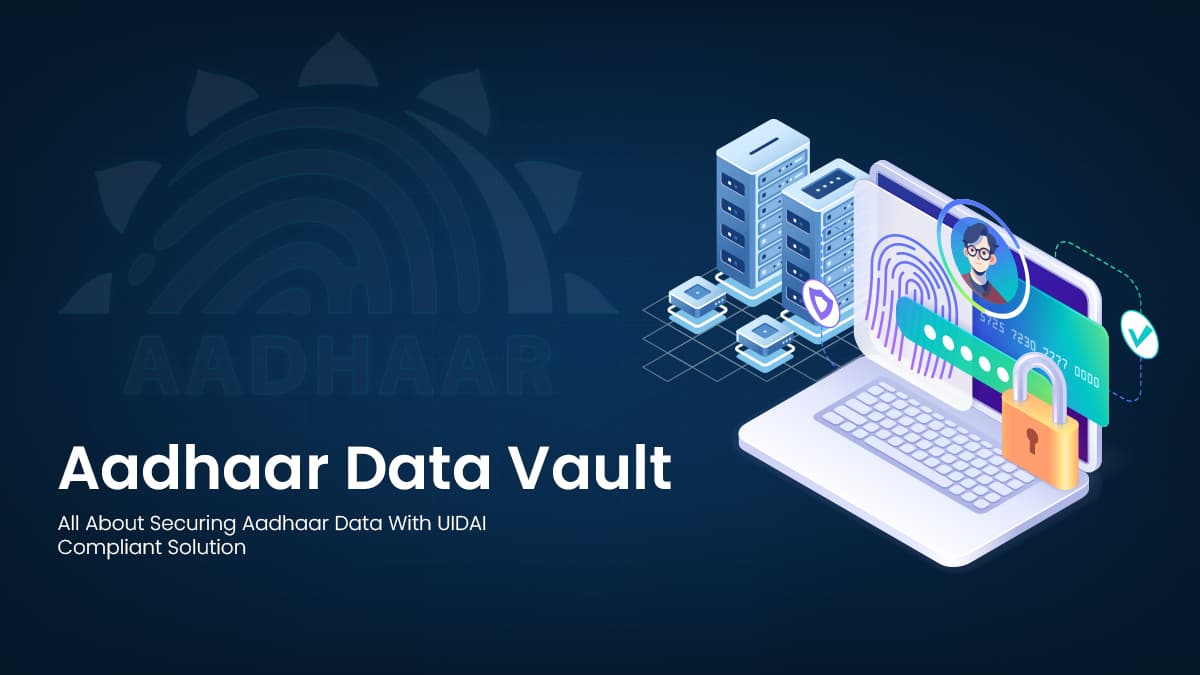
CSM's proven credentials include the Odisha Aadhaar Authentication Framework (OAAF) which has processed over 1.14 billion authentications, enabling frictionless eKYC and service delivery across 16 government departments. Complementing this is the Aadhaar Data Vault (ADV) a privacy-first solution that protects sensitive citizen data through advanced encryption, eliminates duplication, reduces infrastructure costs, and strengthens regulatory compliance.
What distinguishes CSM is its ability to combine interoperability, privacy, and scalability. Our platforms connect welfare, land, health, education, and social protection ecosystems while ensuring secure data sharing through open, vendor-neutral architectures. Through flagship initiatives such as Krushak Odisha and the Social Protection Delivery Platform (SPDP) CSM has demonstrated how trusted digital identity can eliminate fraud, improve beneficiary targeting, and accelerate direct benefit transfers.
Looking ahead, CSM is advancing the vision of Invisible Governance where identity, consent, and services work together in the background. Leveraging privacy-preserving technologies, cryptographic trust frameworks, AI-driven automation, and globally aligned digital identity models, we are helping governments build trust-centric systems that are secure, inclusive, and future-ready.
In the next chapter of GovTech, identity will not be a feature. It will be the infrastructure. And CSM Technologies is uniquely positioned to help governments build that infrastructure with trust, scale, and lasting public value.
The Uncomfortable Part
Infrastructure built too fast can exclude the very people it claims to serve. The World Bank estimates 850 million people lack official identification, and nearly 2.9 billion lack a digital ID for online transactions; among those without ID, roughly one in three struggle to access financial services or healthcare.
Sovereignty versus interoperability remains a real deadlock — an Aadhaar credential isn't automatically recognized under eIDAS or Singpass frameworks. Generative AI now threatens the model too: synthetic identities and deepfakes mean static, one-time proofing is dead; trust must become continuous. Above all, most GovTech failures are governance failures, not software failures — consent, data minimization, and accountability that never caught up with the code.
The Future, Rendered Invisible
Imagine 2030: a child's birth registration auto-creates a secure digital identifier, quietly triggering immunization schedules and school enrollment without a single form. At eighteen, she votes and opens a bank account with a tap, revealing only what's necessary. That is the real KPI of mature GovTech- invisible government, visible impact.
For policymakers and technology leaders, the mandate is clear: audit how many times citizens prove the same fact twice, design for consent revocation as easily as consent given, and build identity as infrastructure worthy of the trust it carries. The question is no longer whether identity becomes infrastructure- it's whether we build it so no one is left off the grid.


Recent Publications


- Agriculture and Allied Services
- AgriTech
- Application Development
- Artificial Intelligence
- Blockchain
- COVID-19
- CSM Editorial
- Data Analytics
- Digital service
- Digital Transformation
- Education
- EduTech
- Emerging Technologies
- Enterprise Resource Planning
- Food Security
- Golden Records
- GovTech Solution
- Green Jobs
- Healthcare
- HR Analytics
- Hybrid Work Culture
- Independence Thought
- Industry 4.0
- Innovation
- IT Consulting
- Land & Industry
- Life@CSM
- Memory Lane
- Mines & Minerals
- Mining Technology
- Opinion Piece
- Precision Agriculture
- Smart City
- Social Listening
- Social Media
- Social Registry
- Super Apps
- Tourism
- User Experience
- Web 3.0
- Work Culture

















We will verify and publish your comment soon.