












Enterprises have often approached digital transformation like renovating a skyscraper—one floor at a time, with architects, engineers, contractors and endless approvals. By the time the top floor was complete, the ground floor already needed another renovation.
That model is becoming obsolete.
The new blueprint isn't about building faster. It's about building differently. Enterprise low-code platforms are quietly replacing traditional software development with visual, collaborative and AI-assisted application development that compresses months of coding into weeks. More importantly, they are changing who builds software and how businesses innovate.
Digital transformation is no longer an IT project. It is becoming an organizational capability.
Beyond Coding: Democratizing Enterprise Innovation
Every enterprise has ideas trapped inside departments.
The finance manager who knows exactly how invoice approvals should work. The HR executive who understands employee onboarding better than anyone else. The operations head who can identify inefficiencies in seconds.
Traditionally, these experts would document their requirements, hand them over to IT, wait several months, test multiple versions, request revisions, and eventually receive an application that only partially matched their vision.
Enterprise low-code platforms eliminate much of this friction.
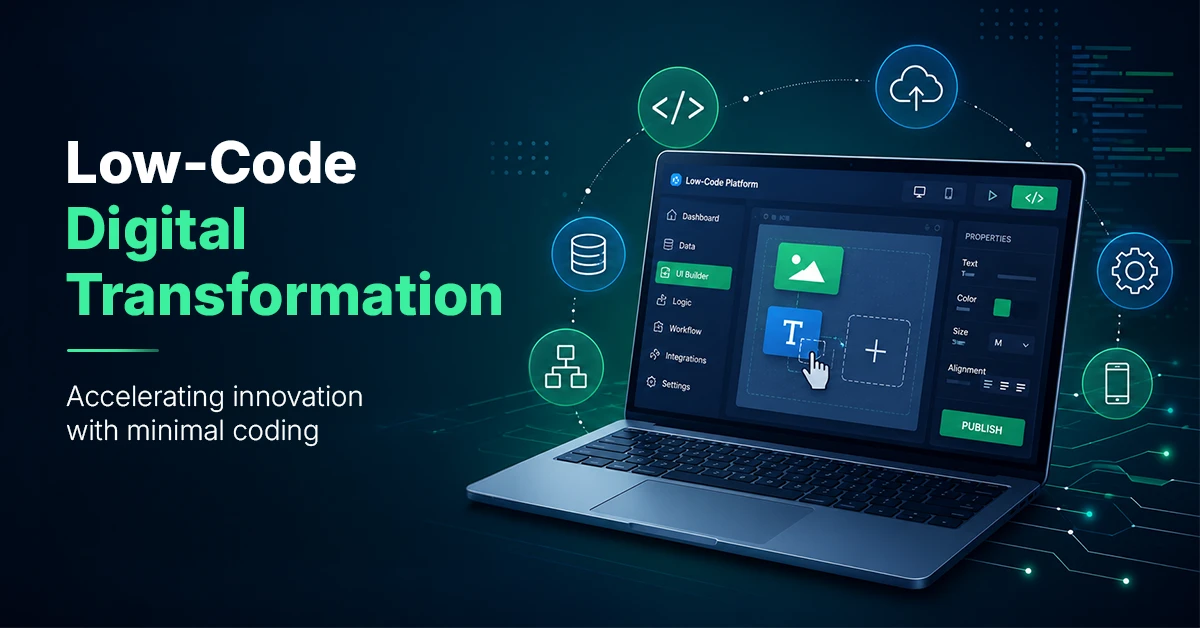
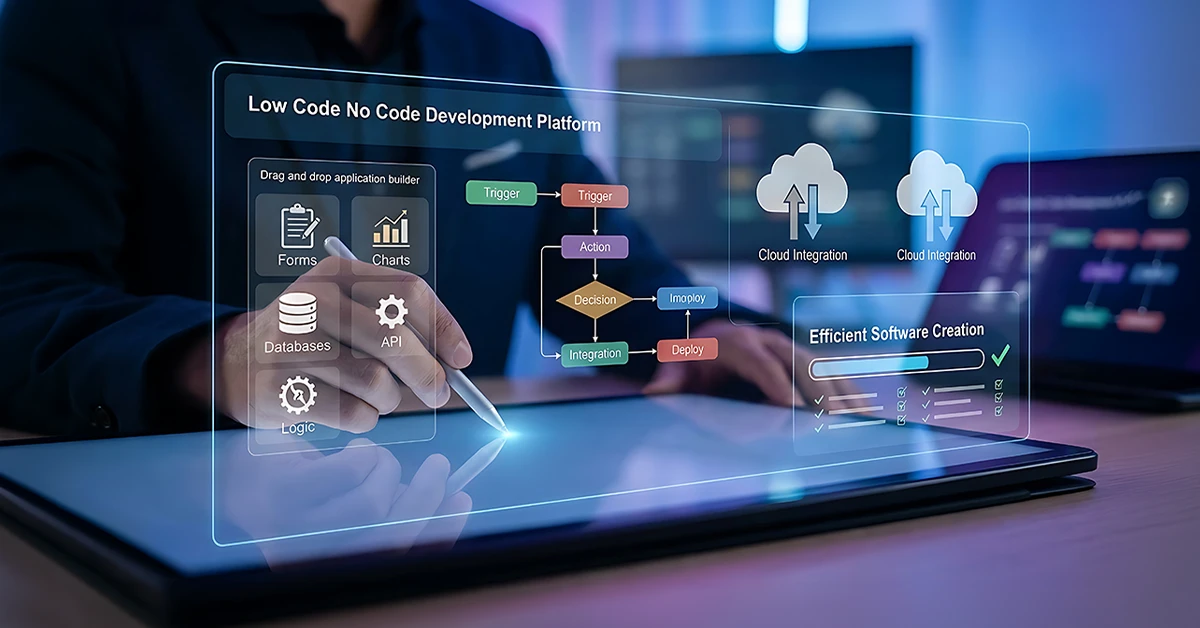
Using intuitive drag-and-drop interfaces, pre-built components and reusable workflows, citizen developers- business users with little or no programming expertise can create applications that automate routine processes while IT teams focus on architecture, cybersecurity and enterprise integrations.
Instead of software being requested, it becomes co-created. That subtle shift is rewriting enterprise productivity.
Speed Has become the new competitive advantage. Markets no longer wait for eighteen-month development cycles.
Regulations change overnight. Customer expectations evolve every quarter. Supply chains shift without warning.
Organizations that require months to modify business applications inevitably struggle against competitors capable of deploying new digital workflows in weeks.
Modern enterprise low-code platforms accelerate application delivery by as much as 90 percent, reducing development timelines from over six months to less than four weeks. Some organizations now prototype operational applications in just a few days.
Think of traditional software development as carving a sculpture from stone.
Low-code platforms work more like assembling modular building blocks- rapidly configurable, adaptable and endlessly reusable.
Speed is no longer a luxury. It has become operational resilience.
Legacy Systems No Longer Need to Be Replaced
One of the biggest myths surrounding digital transformation is that modernization requires dismantling legacy systems.
It rarely does.
Most enterprises still rely on decades-old ERP systems, mainframes and databases containing invaluable operational data. Replacing them entirely is often expensive, disruptive and risky.
Enterprise low-code platforms solve this challenge differently.
Using pre-built API connectors, organizations can integrate legacy applications with modern cloud environments without rewriting millions of lines of code. Existing systems continue performing critical business functions while new digital experiences are layered over them.
Rather than replacing the engine, enterprises are redesigning the dashboard.
The result is lower risk, faster deployment and significantly improved business continuity.
Where AI and Low-Code Converge
The next evolution of low-code is being powered by Artificial Intelligence.
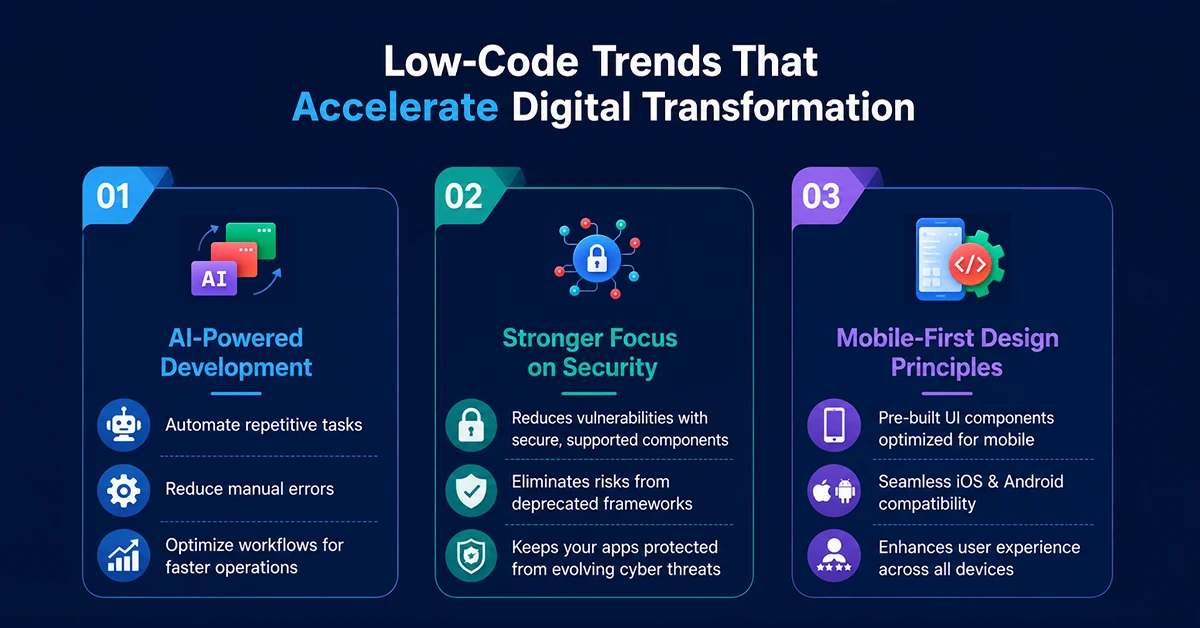
Today's platforms increasingly embed Generative AI capabilities that automatically generate code snippets, create validation rules, design workflows, recommend integrations and even develop test cases before deployment.
AI becomes the co-pilot.
Low-code becomes the cockpit.
Together, they dramatically reduce development complexity while improving software quality and accelerating innovation cycles.
This convergence allows organizations to respond almost instantly to regulatory updates, policy changes or emerging market opportunities without lengthy redevelopment efforts.
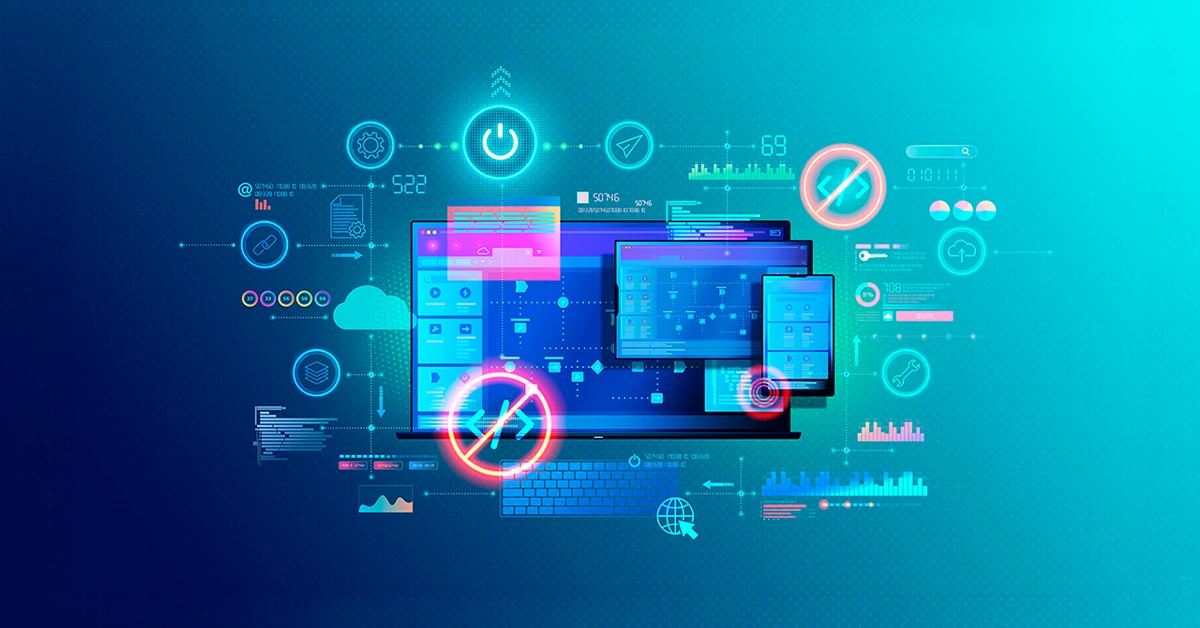
Code Less, Deliver More with CSM’s nCode Factory
Enterprise LCNC platforms are cutting delivery timelines by up to 90% and building applications five times faster than traditional coding — and at CSM Technologies, we have engineered this shift into a proprietary advantage: the CSM nCode Factory.
Our framework doesn't just accelerate app delivery; it reimagines how e-governance, mining, and enterprise solutions get built. A Visual Form Builder lets teams construct complex data-capture interfaces without a line of code. A Dynamic Workflow Engine configures approval matrices and automated escalations visually, turning weeks of backend scripting into hours of intuitive design. Role-based access and SSO governance embed security into the architecture itself, not as an afterthought. And cross-platform deployment means every solution goes live on web and mobile simultaneously — critical for public-sector projects where citizen access can't wait.
The result is resource optimization at scale: our skilled engineers focus on architecture and complex integrations, while standardized, pre-built components keep technical debt low and systems sustainable for the long run.
This is what digital transformation should look like — not a multi-year IT project, but a living, adaptable capability. At CSM Technologies, we are not just adopting low-code; we are defining what it means for governance and enterprise at scale.
Governance Cannot Become an Afterthought
Low-code has often been criticized for encouraging "shadow IT"—applications built outside centralized governance.
That criticism was once justified.
It is far less relevant today.
Modern enterprise platforms such as Microsoft Power Apps and OutSystems incorporate enterprise-grade governance, including identity management, role-based access control, audit trails, compliance monitoring and centralized security policies.
Innovation without governance creates chaos.
Governance without innovation creates stagnation.
The future belongs to organizations capable of balancing both.
Digital Transformation Is Becoming Continuous
Perhaps the greatest contribution of enterprise low-code platforms is philosophical rather than technological.
Digital transformation is no longer a destination marked by large ERP implementations every decade.
It is becoming a continuous process of experimentation, adaptation and improvement.
Departments no longer wait for transformation initiatives. They participate in them.
Employees no longer consume technology. They help create it.
IT no longer acts solely as a builder. It becomes an enabler of enterprise-wide innovation.
That represents one of the most profound organizational shifts of the digital era.
The Road Ahead
As AI, automation, enterprise low-code platforms, citizen development, legacy modernization, workflow automation, digital transformation, cloud computing and enterprise governance continue to converge, software development will increasingly resemble business strategy rather than engineering.
The enterprises that thrive will not necessarily be those writing the most code. They will be those removing the most friction.
The future belongs to organizations where ideas travel faster than bureaucracy, where innovation is everyone's responsibility, and where digital transformation becomes part of everyday business.
Call to Action
If your organization is still measuring digital transformation by the number of projects completed, it may be asking the wrong question. Instead, ask: How quickly can we turn an idea into a secure, scalable business application? Investing in an enterprise low-code platform is no longer just a technology decision- it is a strategic commitment to agility, resilience and continuous innovation. The next generation of market leaders won't simply adopt low-code; they will use it to redefine how enterprises imagine, build and evolve in an increasingly digital world.


Recent Publications

- Agriculture and Allied Services
- AgriTech
- Application Development
- Artificial Intelligence
- Blockchain
- COVID-19
- CSM Editorial
- Data Analytics
- Digital service
- Digital Transformation
- Education
- EduTech
- Emerging Technologies
- Enterprise Resource Planning
- Food Security
- Golden Records
- GovTech Solution
- Green Jobs
- Healthcare
- HR Analytics
- Hybrid Work Culture
- Independence Thought
- Industry 4.0
- Innovation
- IT Consulting
- Land & Industry
- Life@CSM
- Memory Lane
- Mines & Minerals
- Mining Technology
- Opinion Piece
- Precision Agriculture
- Smart City
- Social Listening
- Social Media
- Social Registry
- Super Apps
- Tourism
- User Experience
- Web 3.0
- Work Culture











We will verify and publish your comment soon.