















Imagine trying to control air traffic using flight data that arrives three months late. This may sound absurd but mineral governance has often worked exactly this way.
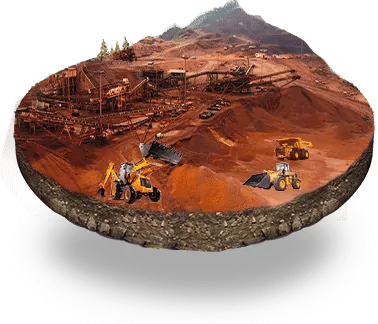
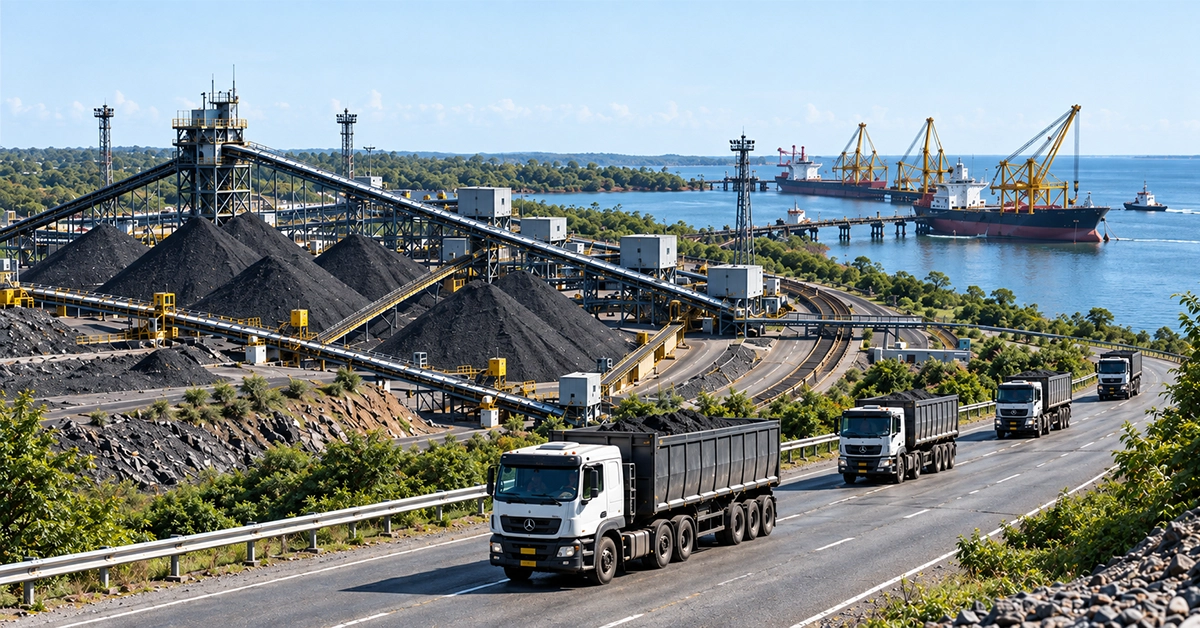
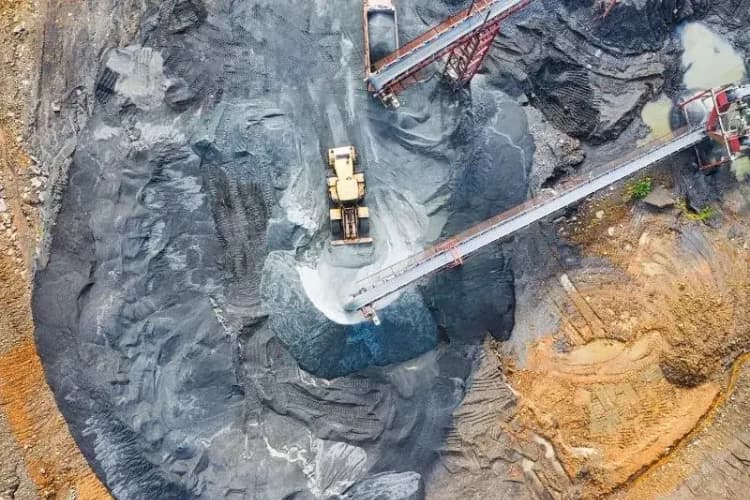
A truck leaves a mine. Ore crosses a checkpoint. A consignment reaches a port. A royalty becomes payable. Somewhere, a form is completed and an audit begins, long after the mineral has moved beyond the regulator's immediate field of vision.
The mineral moves in real time. Governance cannot afford to move in retrospect.
This matters because minerals are becoming the physical foundation of the digital and clean-energy economy. The World Bank estimates that production of minerals such as lithium, graphite and cobalt could rise by nearly 500% by 2050, with more than 3 billion tonnes of minerals and metals required for clean-energy technologies.
The question, therefore, is no longer simply how much a country mines. It is: Can it see, verify and govern every tonne?
The Blind Spot in Traditional Mineral Governance
Conventional mining oversight often resembles driving through fog while relying on the rear-view mirror.
Production data may arrive weeks or months after extraction. Paper registers can be altered, lost or destroyed. Mining authorities, customs, transport agencies and tax departments may hold different versions of the same mineral journey.
That creates precisely the gaps through which under-declaration, royalty leakage, illegal transportation and illicit financial flows can flourish.
The fundamental problem is information asymmetry: the operator knows what was extracted and moved; the state may know only what was reported. Real-time visibility changes that equation.

From Reporting What Happened to Knowing What Is Happening
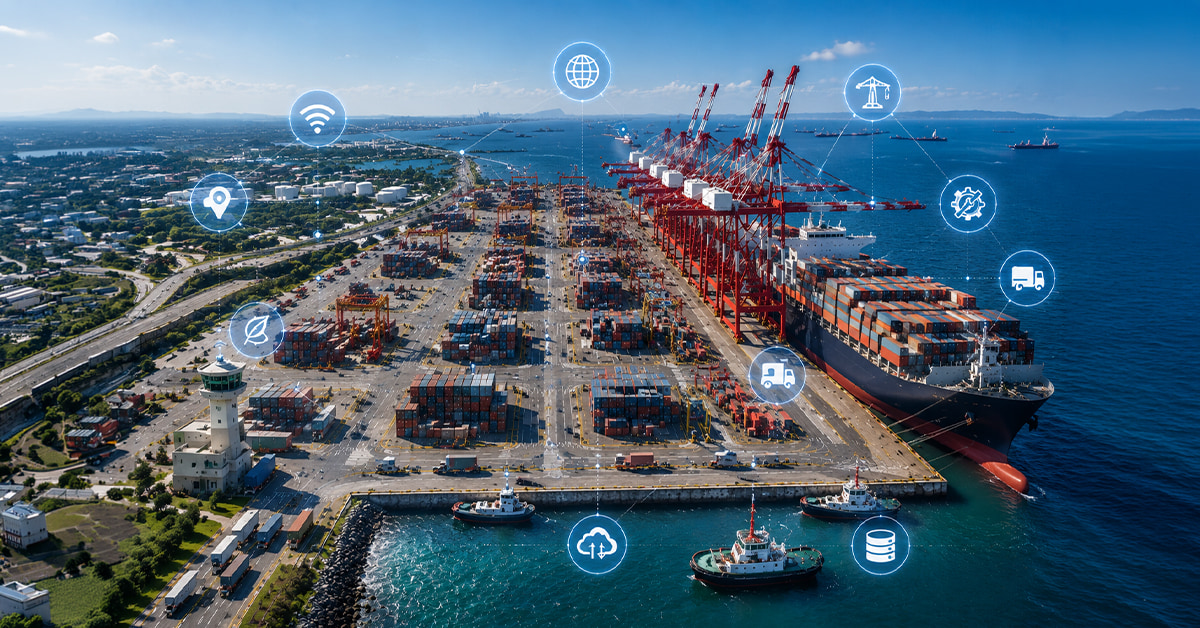
A digitally integrated mineral governance platform can connect mine production, IoT-enabled weighbridges, GPS-enabled transport, digital permits, customs, taxation, environmental monitoring and export data.
Suddenly, a discrepancy is no longer an audit finding waiting months for discovery.
If a mine declares 100 tonnes but a downstream checkpoint records 115, the system can flag the anomaly immediately. AI can identify unusual production or movement patterns. Satellite imagery can reveal changes in mining footprints. Geofencing can identify deviations from approved transport routes. Digital records can create an auditable chain from pit to port. This is the crucial transformation: from a database of events to a living system of oversight.

The Revenue Dividend
Real-time mineral governance is also fiscal governance.
Accurate production and dispatch data can strengthen royalty assessment, reduce opportunities for under-reporting and enable tax authorities to reconcile mineral movement with commercial declarations.
India's mineral economy illustrates the scale of the opportunity. The Ministry of Mines reported MCDR mineral production valued at ₹1,48,234 crore during April–January 2025–26, compared with ₹1,19,417 crore during the corresponding period a year earlier. At this scale, fragmented data is itself a governance risk.
The ESG Dimension: Provenance Becomes Proof
The mineral of the future will increasingly need a digital provenance story.
Was it legally extracted? Did it originate from an authorized mine? Did it travel through an approved route? Were environmental and labour safeguards followed?
The OECD's due-diligence framework for responsible mineral supply chains emphasises risk-based processes to address human-rights, conflict and financial-crime risks across mineral supply chains.
Real-time traceability can strengthen that process by connecting licenses, ownership, production, transport and trade records into an auditable evidence chain.
Beneficial-ownership transparency, too, can help governments address corruption and strengthen taxation in extractive industries.
For investors and responsible buyers, transparency is rapidly becoming a condition of trust rather than a differentiator.
But Technology Is Not a Silver Bullet
There is an uncomfortable truth.
A real-time dashboard does not automatically create real-time governance. A government can collect data continuously and still make decisions slowly. Sensors can generate information while departments remain disconnected. AI can flag an anomaly without guaranteeing that anyone investigates it.
Real-time visibility therefore needs more than IoT, GIS, satellite imagery, blockchain or AI. It requires interoperability, common data standards, institutional coordination, cybersecurity, accountable workflows and human oversight.
The objective should not be to digitize paper bureaucracy. It should be to redesign the governance architecture around evidence.

How CSM Turns Mineral Data into Governance Intelligence
The future of mineral governance lies in moving from delayed audits to real-time intelligence. As governments strive to curb mineral leakages, strengthen compliance, and maximize resource revenues, end-to-end digital visibility has become a strategic imperative.
CSM Technologies is driving this transformation through its Integrated Digital Mineral Governance ecosystem, powered by IoT-enabled checkpoint monitoring AI-driven analytics, automated weighbridges GPS-based vehicle tracking, digital transit passes, and real-time compliance monitoring. Together, these technologies create a seamless chain of visibility from mine to market.
What sets CSM apart is its ability to establish a single source of truth across mineral extraction, dispatch, transportation, checkpoint validation, royalty assessment, and enforcement. Smart checkpoints equipped with RFID, ANPR (Automatic Number Plate Recognition) cameras, sensors, and automated barriers digitally verify every mineral movement, eliminating manual intervention, reducing unauthorized transportation, and creating tamper-proof audit trails.
The result is measurable impact: faster dispatch processes, improved royalty realization, reduced revenue leakage, automated compliance enforcement, and greater transparency for regulators and mining enterprises. AI-powered anomaly detection further helps authorities identify discrepancies in production, transit, and permits before they become governance risks.
Beyond operational efficiency, CSM strengthens ESG compliance, responsible sourcing, and stakeholder trust through end-to-end traceability. By delivering real-time visibility, actionable intelligence, and complete control over the mineral value chain, CSM is helping governments and mining enterprises build a smarter, more transparent, and future-ready mineral economy.
From Real-Time to Predictive Mineral Governance
Real-time visibility is only the beginning. The next frontier is predictive mineral governance.
AI could identify emerging patterns in production, transport and trade. Satellites could detect suspicious mining expansion. Digital twins could model mineral flows. Integrated data could reveal inconsistencies between extraction, ownership, payments and exports.
The mine itself becomes a node in a continuously monitored national mineral intelligence network. And that could fundamentally change the role of the regulator—from inspector after the event to intelligence-led guardian of the resource.
The Call to Action
Governments, regulators and mining enterprises should begin with one practical question: How old is your newest actionable mineral data?
If production, movement and royalty information still arrives weeks or months after the event, the governance model is already behind the mineral. The answer is to build integrated real-time mineral governance platforms that connect IoT, GIS, satellite intelligence, AI analytics, digital traceability and interoperable government systems.
The mineral race of the coming decades will not be won simply by extracting more. It will be won by seeing more, knowing sooner and governing better.
The future is a mineral economy where every tonne has a digital identity, every movement leaves an auditable trail, every anomaly triggers intelligent scrutiny and every legitimate transaction strengthens public value.
The future of mineral governance is not a bigger paper trail. It is a seamless digital system- from pit to port, from data to decision, and from extraction to accountability. The countries that build that nervous system first will not merely govern their minerals better. They will govern their economic future better.


Recent Publications


- Agriculture and Allied Services
- AgriTech
- Application Development
- Artificial Intelligence
- Blockchain
- COVID-19
- CSM Editorial
- Data Analytics
- Digital service
- Digital Transformation
- Education
- EduTech
- Emerging Technologies
- Enterprise Resource Planning
- Food Security
- Golden Records
- GovTech Solution
- Green Jobs
- Healthcare
- HR Analytics
- Hybrid Work Culture
- Independence Thought
- Industry 4.0
- Innovation
- IT Consulting
- Land & Industry
- Life@CSM
- Memory Lane
- Mines & Minerals
- Mining Technology
- Opinion Piece
- Precision Agriculture
- Smart City
- Social Listening
- Social Media
- Social Registry
- Super Apps
- Tourism
- User Experience
- Web 3.0
- Work Culture









We will verify and publish your comment soon.