



Why Cybersecurity Must Begin at the Architecture Stage
 Jayajit DashSenior Manager- Corporate Communications (Marketing)
No architect builds a 30-storey tower and then wonders where its foundations should go. Yet organizations routinely build digital systems this way: features first, security later, and patches when trouble arrives.
The hard truth is that attackers often exploit not a failure of security software, but a failure of system design. Cybersecurity must therefore begin at the architecture stage, when vulnerabilities can still be prevented rather than managed.

Why Security-by-Design Matters
Cybersecurity architecture determines how identity, applications, networks, data and communication systems work together to protect digital assets. When security is embedded from inception, organisations gain four advantages:
- Lower costs: Early vulnerability identification avoids expensive redesign, emergency fixes and mounting technical debt. IBM's Cost of a Data Breach Report 2024 estimated the global average breach cost at $4.88 million.
- Stronger resilience: Built-in safeguards are structural protections, unlike fragile layers of compensating controls added after deployment.
- Simpler compliance: Native security controls make it easier to address regulatory obligations, including India's Digital Personal Data Protection Act (DPDP) 2023.
- Sustained trust: Secure systems protect sensitive information, reduce disruption and preserve stakeholder confidence.
Retrofitting security is like installing fire exits after a building is occupied. Possible, perhaps, but needlessly expensive and potentially dangerous.
What Must a Secure Architecture Include?
Security-by-design must translate into engineering decisions, not remain a corporate slogan.
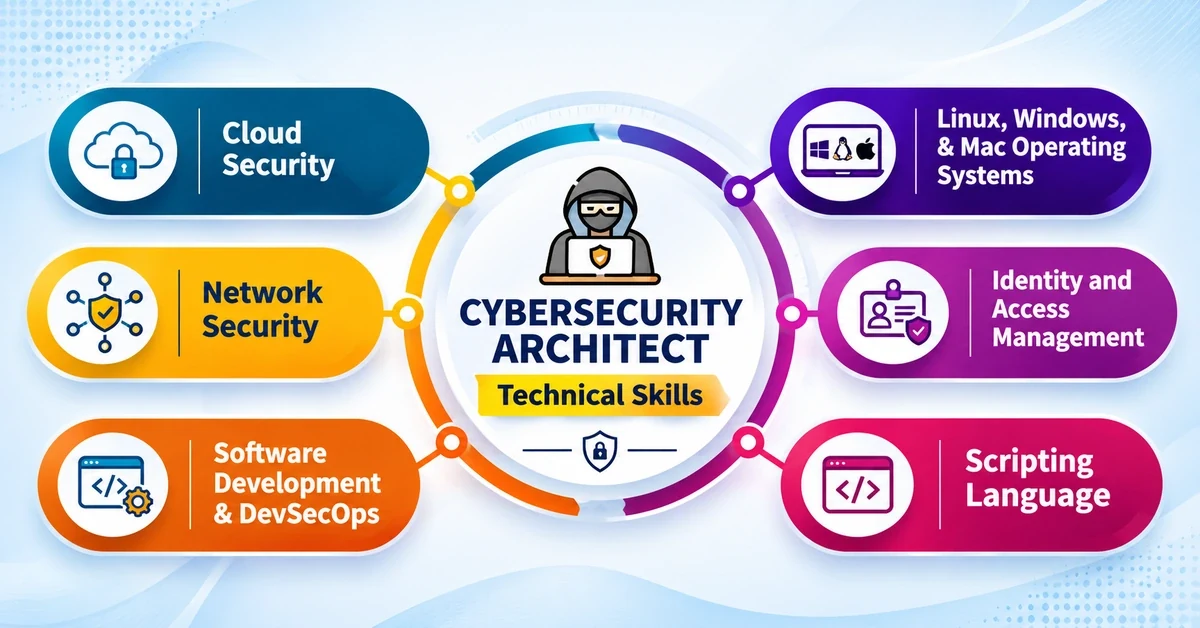
- Threat modelling: Identify critical assets, attack surfaces and potential vulnerabilities before development begins.
- Zero Trust and IAM (Identity and Access Management): Verify every user, device and application; enforce least-privilege access and strong authentication.
- Data protection: Apply encryption, data minimisation and controlled retention by default.
- Network segmentation: Prevent one compromised component from becoming a gateway to the entire infrastructure.
- Secure integration: Assess APIs, cloud platforms, third-party vendors and software dependencies as part of the attack surface.
- Continuous assurance: Embed security architecture reviews, DevSecOps, monitoring and recovery testing throughout the development lifecycle.
Cybersecurity and Infrastructure Security Agency’s (CISA) Secure by Design initiative, National Institute of Standards and Technology’s (NIST) Secure Software Development Framework and the UK's National Cyber Security Centre guidance reinforce a common principle: security belongs throughout the technology lifecycle, not merely at release.
How CSM builds cyber resilience into every layer of digital transformation
In an increasingly interconnected world, cybersecurity cannot remain an afterthought. It must be engineered into the very architecture of digital transformation. CSM Technologies brings this philosophy to life through an integrated cybersecurity ecosystem that protects applications, networks, cloud environments, enterprise data and critical infrastructure.
Backed by CMMI DEV V3.0 Level 5 SOC 2 Type II and ISO 27001 certifications CSM embeds security across the software development lifecycle through secure coding practices, security reviews and vulnerability assessments.
Its cybersecurity capabilities span continuous threat monitoring through its proprietary CYQER 24/7 Security Operations Centre (SOC) Security Information and Event Management (SIEM), Identity and Access Management (IAM), data encryption, network and cloud security, and OT/SCADA protection.
From proactive threat detection and access control to disaster recovery and business continuity, CSM delivers a risk-aligned, scalable security framework tailored to organisational needs. With over 15 years of cybersecurity experience, CSM helps governments and enterprises minimise vulnerabilities, safeguard sensitive information, strengthen operational resilience and build digital ecosystems where innovation and trust go hand in hand.
The Critical Question: Are We Building Securely?
The industry speaks enthusiastically about digital transformation but often measures success through deployment speed, feature counts and compliance certificates. None guarantees architectural resilience.
As AI, IoT, cloud-native platforms and interconnected public infrastructure expand, insecure foundations can amplify risks across entire ecosystems. For GovTech platforms handling citizen identities, land records and public benefits, the consequences extend beyond financial loss to public trust.

Build Security into Tomorrow
Before approving your next digital transformation project, ask your architects and technology leaders one question: Is cybersecurity embedded in the blueprint, or simply included in the budget?
Make threat modelling, Zero Trust reviews and security validation mandatory from project inception. The future belongs to organisations that build not merely faster, but safer.
Don't bolt security on. Build it in. That’s because hackers don't just attack systems; they exploit the decisions made when those systems were designed.