




















For decades, procurement in Africa has carried a reputation for being slow, opaque, and vulnerable to inefficiencies. Manual bidding, limited supplier visibility, and fragmented systems meant that value leakage was almost inevitable. But something powerful is happening across the continent today - a quiet revolution that’s turning procurement from a cost centre into a strategic advantage.
Digital auctions — once used only by global corporations — are now reshaping how African governments and businesses buy, negotiate, and create value. And in the process, they are rewriting the procurement playbook with transparency, speed, and competition at its core.
 (1).jpg)
The New Economics of Procurement
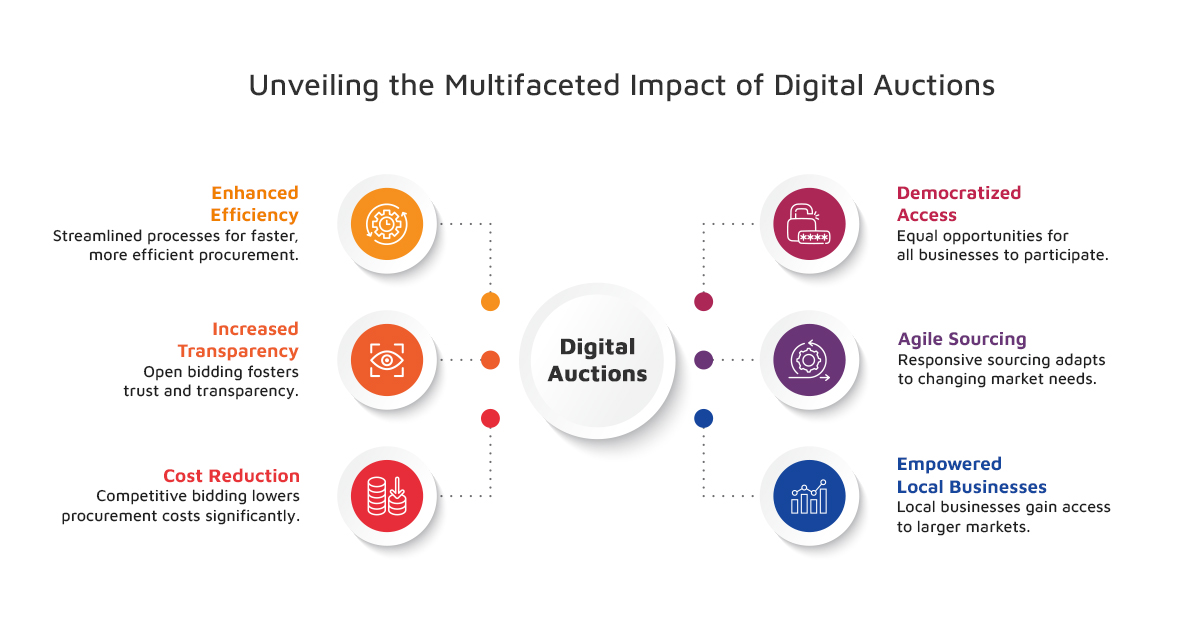
Digital auctions flip the traditional procurement model on its head. Instead of buyers manually reviewing bids, comparing disparate documents, and negotiating individually, an e-auction creates a real-time, transparent, competitive marketplace.
Suppliers can see live bid standings, buyers can enforce compliance instantly, and the entire process becomes data-driven rather than relationship-driven.
The result?
- Lower procurement costs
- Faster award cycles
- Reduced corruption risks
- Greater supplier inclusion
- Predictable, auditable outcomes
This shift is especially consequential for Africa where public procurement accounts for 15–20% of GDP, making it one of the continent’s biggest levers for economic transformation.
Kenya: The Continent’s Most Compelling Example
Kenya has emerged as one of Africa’s digital procurement trailblazers.
Through its e-procurement modules under Integrated Financial Management Information System (IFMIS), government agencies now use real-time e-tendering and e-auctioning to procure goods and services with unprecedented transparency.
The impact is tangible:
- Faster bid cycles
- Significant savings for ministries
- Wider participation from SMEs
- Reduced discretion that once enabled bid manipulation
Kenya’s success demonstrates a powerful truth: digital auctions are not just a technology upgrade - they are a governance reform.
.jpg)
Beyond Transparency: The Rise of Procurement Intelligence
Digital auctions generate something the old system never could — clean, comparable, high-velocity data.
This opens new possibilities:
- Benchmarking market prices
- Predicting supplier risk
- Identifying collusive bidding patterns
- Optimizing purchase frequency and volume
Mapping domestic vs. international supplier landscapes
African countries that once struggled with fragmented procurement information now have a direct path to data-backed procurement policy-making.
Rwanda, South Africa, Tanzania, and Nigeria are already moving in this direction, integrating auction engines with ERP systems, national supplier registries, and automated compliance modules.
 (1).jpg)
More Competition, More Inclusion
Perhaps the most transformative impact of digital auctions is inclusion.
Small and medium enterprises (SMEs) long excluded due to paperwork, travel costs, and information asymmetry — now participate from anywhere.
Real-time bidding removes the intimidation factor of traditional tendering. Mobile-friendly interfaces widen the supplier base dramatically. And transparent rules level the field between established players and emerging businesses.
This is a game-changer for Africa’s procurement ecosystem, where SME participation is directly linked to job creation and local value retention.
 (2) (1).jpg)
The AfCFTA Effect: A Continental Marketplace in the Making
The African Continental Free Trade Area (AfCFTA) is quietly unlocking cross-border value chains. Digital auctions fit naturally into this emerging architecture.
Imagine: A government in West Africa running a digital auction that attracts suppliers from East Africa within minutes. A regional power utility sourcing hardware from qualified vendors across the continent through a single auction interface.
A new class of pan-African suppliers emerging — visible, validated, and cost-competitive.
Digital auctions may well become the procurement engine behind Africa’s $3.4 trillion single market ambition.
A Future Built on Resilience, Not Just Efficiency
African markets are often described as “volatile,” but they are also adaptable, inventive, and fast-moving.
Digital auctions strengthen this resilience by introducing procurement systems that:
- Prevent price shocks through competitive discovery
- Enable quicker sourcing during crises
- Reduce dependency on intermediaries
- Improve compliance in complex supply chains
In a world where supply disruptions are becoming the norm, the ability to run a transparent online auction and close procurement within hours is a strategic capability.
What Role Can CSM Technologies Play in This Transformation?
At CSM Technologies, we believe that digital auctions are not just a tool, they are the backbone of a modern, transparent, and competitive procurement ecosystem. With over two decades of experience in digitizing government processes across Africa, we bring a deep understanding of market structures, regulatory nuances, and socio-economic realities. Our auction platforms are designed to simplify participation for SMEs, strengthen audit trails for governments, and deliver real-time price discovery for large buyers.
By integrating e-auctions with supplier management, contract governance, and analytics dashboards, we help build procurement systems that are intelligent, inclusive, and future-ready. With an experience of co-creating the Integrated Tea Trade System (ITTS) platform at Mombasa Kenya, we hold promise to building scalable procurement architectures in other African nations. CSM is uniquely positioned to support African governments and enterprises in unlocking cost efficiencies, fostering trust, and accelerating digital governance. The future of procurement in Africa is real-time, transparent, and data-driven and CSM is ready to lead that journey.
Africa’s Procurement Revolution Has Already Begun
Digital auctions are not a trend; they are a new operating system for procurement in Africa.
They democratize access. They reduce corruption opportunities. They accelerate economic efficiency.
And above all, they empower governments and businesses to buy better, faster, and smarter.
The procurement playbook has changed and the nations that embrace digital auctions today will shape Africa’s economic trajectory tomorrow.

Recent Publications






- Agriculture and Allied Services
- AgriTech
- Application Development
- Artificial Intelligence
- Blockchain
- COVID-19
- CSM Editorial
- Data Analytics
- Digital service
- Digital Transformation
- Education
- EduTech
- Emerging Technologies
- Enterprise Resource Planning
- Food Security
- Golden Records
- GovTech Solution
- Green Jobs
- Healthcare
- HR Analytics
- Hybrid Work Culture
- Independence Thought
- Industry 4.0
- Innovation
- IT Consulting
- Land & Industry
- Life@CSM
- Memory Lane
- Mines & Minerals
- Mining Technology
- Opinion Piece
- Precision Agriculture
- Smart City
- Social Listening
- Social Media
- Social Registry
- Super Apps
- Tourism
- User Experience
- Web 3.0
- Work Culture



















We will verify and publish your comment soon.