












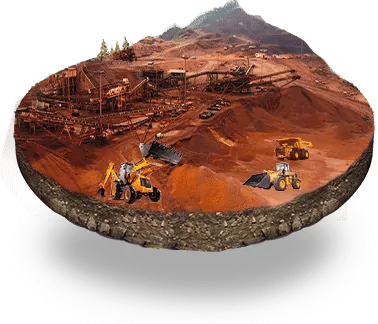








Supply chains were once invisible plumbing. If goods arrived on time, nobody asked how. Today, supply chains make headlines. Wars, pandemics, climate shocks, and trade disruptions have exposed a hard truth: disconnected supply chains are fragile, costly, and often unfair. In response, India and Africa are quietly building something far more powerful - connected supply chains that are digital by design, resilient by intent, and inclusive by necessity.
When bilateral trade between India and Africa crossed $100 billion in 2024–25, the real story was not the number. It was the invisible digital infrastructure making that scale possible. Think of it this way: if traditional supply chains were telegram networks, connected supply chains are neural pathways. Information flows instantly, decisions adapt in real time, and every node responds intelligently.
.jpg)
From Corridors to Connected Networks
India–Africa trade was once largely transactional - raw materials flowing one way, finished goods the other. That model is evolving. With the African Continental Free Trade Area (AfCFTA) creating a single market of 1.4 billion people, and India’s Digital Public Infrastructure (DPI) proven through systems like UPI handling billions of transactions offering a tested blueprint, the focus has shifted from volume to value creation.
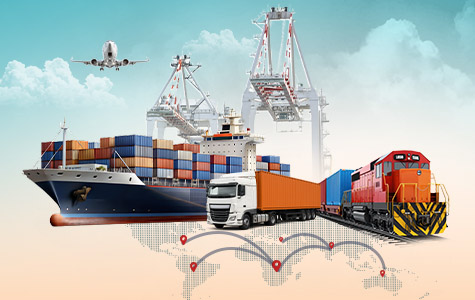
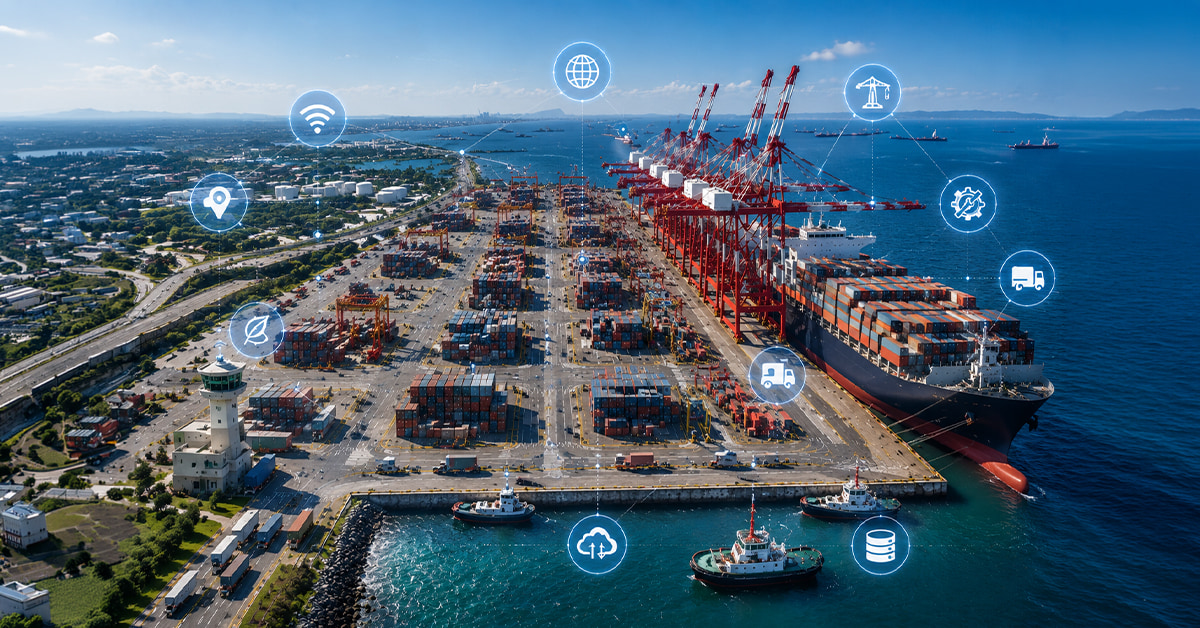
Ports in Tanzania and Mozambique, upgraded with Indian investment, are no longer just moving cargo. They are becoming data-enabled gateways. India’s logistics hubs - Mundra, Nhava Sheva, Chennai are digitally linked to African trade corridors through e-documentation, GPS-enabled tracking, and real-time freight visibility. Goods are no longer “on the way”; they are digitally present at every moment.
.jpg)
Digital Is the New Infrastructure
Concrete and steel still matter, but the real backbone of modern trade is digital. India brings scale-ready digital platforms. Africa brings mobile-first innovation. Together, they share a rare advantage over developed economies - the ability to leapfrog legacy systems.
While many Western economies struggle to retrofit decades-old infrastructure, India and Africa are building natively digital. Kenya’s M-Pesa did not digitize banks; it reinvented payments. India’s e-NAM did not modernize mandis; it reimagined agricultural markets. Applied to supply chains, this leapfrogging is transformative.
IoT sensors monitor temperature-sensitive pharmaceutical shipments. GPS-enabled trucks eliminate phantom kilometers. AI-driven demand forecasting reduces the farm wastage that costs Africa nearly 40 percent of its produce. Blockchain creates immutable audit trails, turning opacity into instant trust. These are no longer pilots; they are becoming the operating systems of trade.
From Efficiency to Resilience
Recent disruptions - from pandemic shutdowns to Red Sea shipping crises have shown that speed alone is not enough. India and Africa are now designing supply chains for resilience. Distributed manufacturing hubs across Africa, backed by Indian technology and capital, reduce dependence on single geographies. Digital logistics platforms enable dynamic rerouting instead of costly delays.
Yet the friction points are real. Africa’s $67–107 billion annual infrastructure investment gap adds a 40–60 percent cost surcharge on goods. Digital literacy gaps mean systems often outpace workforce readiness. India’s rural last mile still faces connectivity challenges, while Africa continues to navigate cross-border regulatory complexity despite AfCFTA.
These challenges are not dead ends. They are invitations for innovation.
.jpg)
Building Supply Chains That Think, Adapt, and Deliver: The CSM Edge
As supply chains grow more complex and interconnected, CSM Technologies stands at the forefront of building truly connected, transparent, and resilient supply chain ecosystems for governments and enterprises. Drawing from deep GovTech expertise and large-scale national implementations, CSM’s Connected Supply Chain Systems are designed to transform fragmented, leakage-prone operations into intelligent, data-driven value chains.
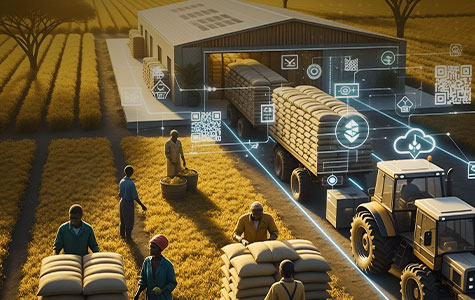
At the core of CSM’s solution is an end-to-end digital platform that seamlessly integrates procurement, inventory, logistics, accounting, and reporting. Powered by AI, IoT, blockchain, and big data analytics, the platform delivers real-time visibility from source to last mile. In agriculture, this translates into farm-to-fork traceability, precise demand forecasting, quality assessment, FIFO-based (First In, First Out) inventory management, and optimized allocation to depots and Fair Price Shops.
In healthcare, CSM’s e-Pharma supply chain ensures automated drug procurement, stock monitoring, and distribution, tightly integrated with hospital systems for zero blind spots.
The impact is proven at scale. CSM’s paddy procurement automation helped a state transition from deficit to surplus, enabling over $1 billion in direct farmer payments annually, dramatically reducing leakages, and strengthening public distribution for millions. Beyond efficiency and cost optimization, CSM’s connected supply chains build trust, curb rent-seeking, enhance food security, and future-proof systems against shocks. CSM Technologies doesn’t just digitize supply chains, it reimagines them for resilience, transparency, and inclusive growth.
.jpg)
A Shared Future, Co-Created
What is emerging across India and Africa is more than a trade partnership. It is a Global South blueprint for connected, transparent, and scalable supply chains. MSMEs gain access to regional and global markets. Farmers gain price visibility and faster payments. Governments gain trust through transparency. Enterprises gain agility in an uncertain world.
The future will belong to supply chains that can sense, think, and adapt across borders in real time.
Call to Action
For governments, the mandate is clear: invest in digital public infrastructure alongside roads and ports. For enterprises, the opportunity is urgent—move from fragmented logistics to connected ecosystems. And for technology leaders, this is the moment to design supply chains that do not merely move goods, but move economies forward.
The next decade will not be defined by who produces the most, but by who connects the smartest. India and Africa are already laying the rails. The world should be paying attention.


Recent Publications




- Agriculture and Allied Services
- AgriTech
- Application Development
- Artificial Intelligence
- Blockchain
- COVID-19
- CSM Editorial
- Data Analytics
- Digital service
- Digital Transformation
- Education
- EduTech
- Emerging Technologies
- Enterprise Resource Planning
- Food Security
- Golden Records
- GovTech Solution
- Green Jobs
- Healthcare
- HR Analytics
- Hybrid Work Culture
- Independence Thought
- Industry 4.0
- Innovation
- IT Consulting
- Land & Industry
- Life@CSM
- Memory Lane
- Mines & Minerals
- Mining Technology
- Opinion Piece
- Precision Agriculture
- Smart City
- Social Listening
- Social Media
- Social Registry
- Super Apps
- Tourism
- User Experience
- Web 3.0
- Work Culture

















We will verify and publish your comment soon.