






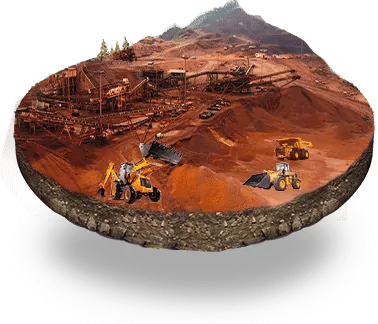








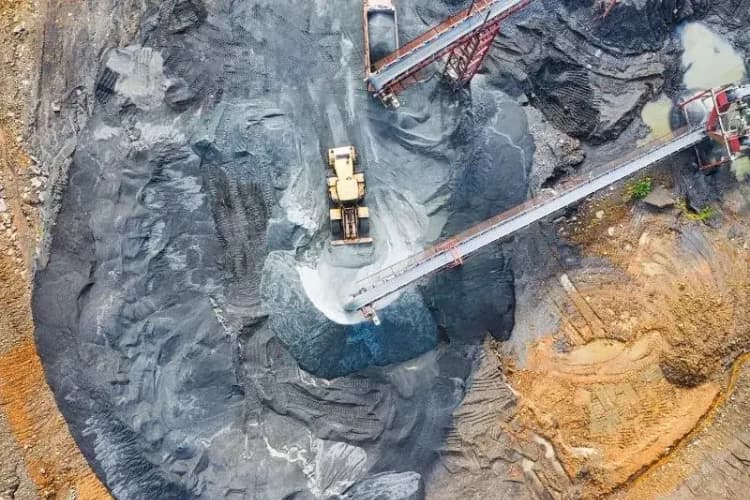
India’s mineral wealth quietly powers much of its economic growth. With annual mineral production valued at over ₹1.71 lakh crore (approximately US$ 18.7 billion) in FY2025-26, the sector remains one of the country’s most strategically important industries. Yet, long before steel reaches a bridge or cement reaches a highway, minerals move through a complex chain of permits, dispatch records, transport routes, compliance checks, and administrative approvals.
For decades, mineral governance relied on a familiar pattern: operations moved in real time while oversight depended on inspections, audits, and compiled reports. That approach worked when volumes were manageable. But when nearly 40,000 mineral transport movements take place every day across mines, roads, checkpoints, and administrative jurisdictions, the distance between action and oversight becomes a challenge in itself.
One of India's most mineral-rich geographies illustrates this clearly. Contributing nearly 14% of the country's total mineral value and producing close to 99% of its gypsum, the region oversees more than 80 mineral varieties across a mining ecosystem that spans mines, transporters, leaseholders, and regulatory authorities. At this scale, dispatch validation, vehicle monitoring, lease administration, compliance management, and field enforcement cannot function effectively as isolated processes.
Recognizing this, the administration moved toward a more integrated model, bringing these functions into a single digital framework rather than treating them as separate activities reviewed after the fact. The shift was not about digitizing paperwork. It was about creating a connected view of the mineral lifecycle, where a dispatch entry, a transit movement, a lease approval, and a compliance submission all become part of the same operational picture.
Moving Oversight Closer to the Transaction
The biggest change is not the technology itself, but where it is being used: at the point of the transaction, not after it.
A digital framework developed by CSM Technologies helps connect activities that traditionally operated in isolation, creating greater continuity across dispatch, transport, compliance, and administration.
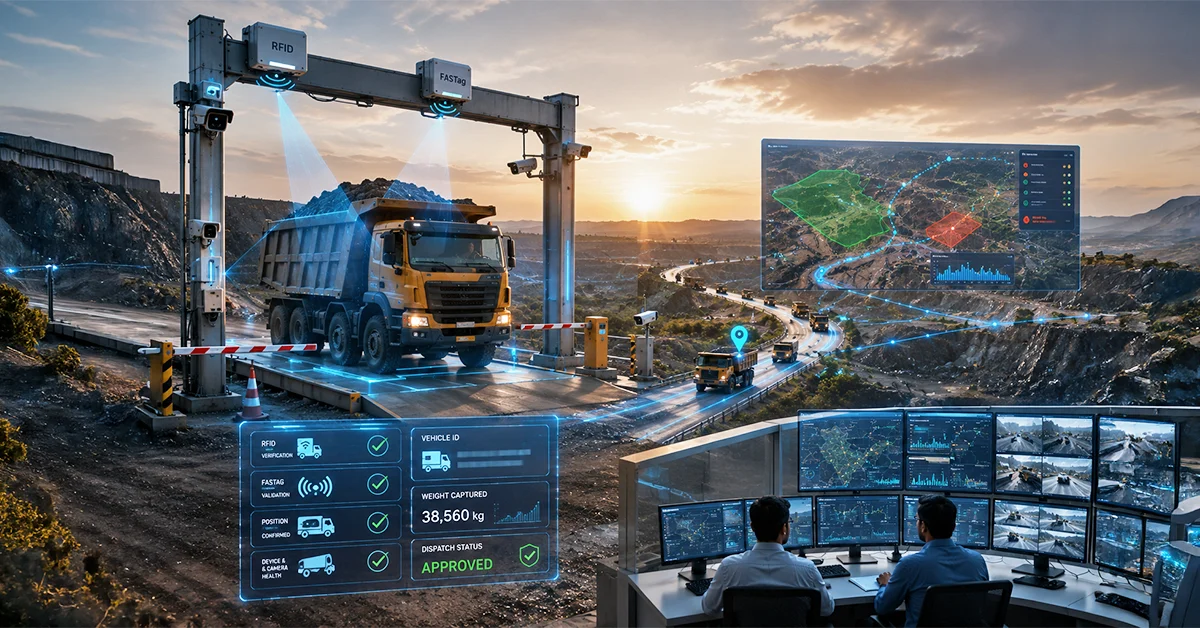
At the weighbridge, RFID and FASTag integration establish a verifiable digital identity before a vehicle is cleared for dispatch. Position sensors confirm proper placement, weight data is captured directly from the digitizer, and image-processing systems monitor continuously for obstruction, tampering, and hardware anomalies. Together, these checks move validation closer to the point of dispatch.
Once a vehicle leaves the gate, GPS-enabled tracking provides visibility across approved transit routes, geo-fenced lease boundaries, and designated destinations. Route deviations, excessive halts, duplicate trips, and device tampering events are identified in near real time, shifting administrators from periodic monitoring to continuous oversight.
Administrative processes have evolved similarly. Lease extensions, licence applications, mine manager appointments, compliance submissions, and statutory approvals now move through structured digital workflows where every decision carries a defined authority and a traceable record. Drone-based volumetric surveys link geospatial measurements directly with statutory reporting, creating greater consistency between field observations and compliance submissions.
Together, these capabilities connect dispatch, transport, compliance, and administration into a single, continuously updated picture.
Beyond Administrative Boundaries
Oversight no longer stops at the walls of a government office. Buyers, field officials, and citizens increasingly shape how information is captured, reviewed, and acted upon.
Digital mineral booking services allow buyers to request minerals, complete payments, and obtain permits online. Mobile applications support field officials in processing applications while enabling citizens to report irregularities through geo-tagged submissions.
This broadens the flow of information beyond departmental systems, bringing field observations and citizen inputs into the same monitoring ecosystem while creating additional channels for accountability.
One View of Operations
As digital systems mature, the challenge shifts from collecting information to coordinating it effectively.
The value of an integrated framework becomes most visible when these information streams come together.
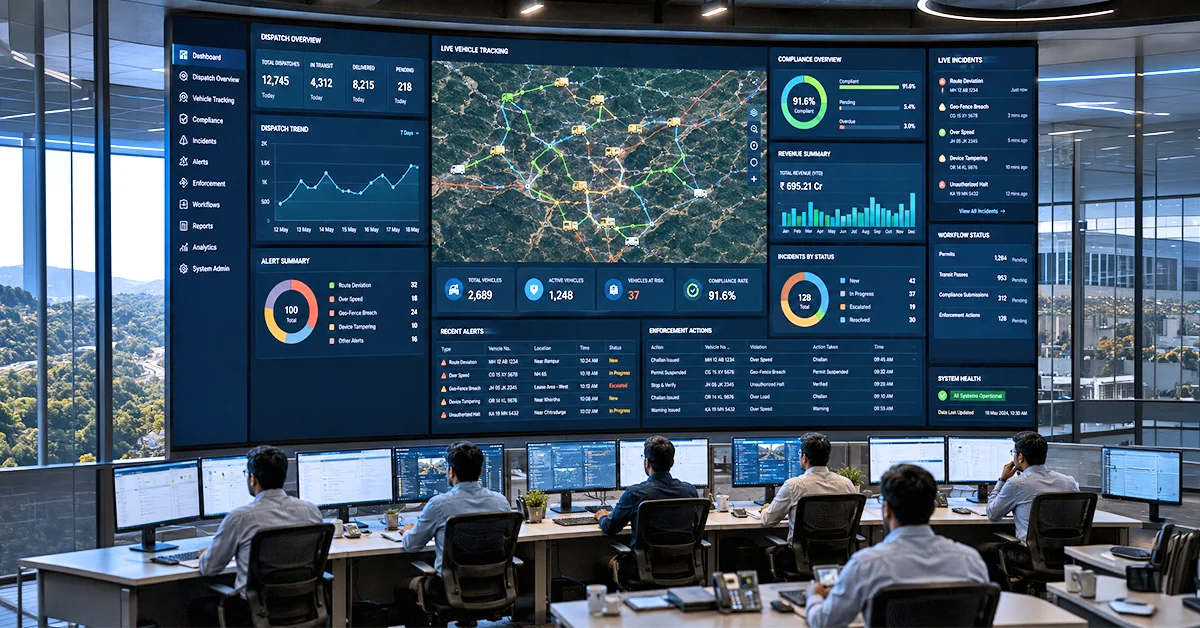
An Operation Control Centre brings together dispatch records, vehicle telemetry, compliance workflows, field incidents, and monitoring alerts in one place. Officials can review exceptions, assign incidents, monitor escalations, track enforcement actions, and access historical records through documented workflows rather than disconnected channels.
The value lies less in collecting more data and more in helping officials act on it faster and with greater context, turning a geographically dispersed administration into a coordinated operating environment.
Governance at Scale
The true test of any system lies in how it performs at scale.
In one of India's largest mining administrations, the platform supports oversight across more than 13.70 lakh dispatch records and 5.30 lakh transit passes, while administering over ₹695 crore in revenue through structured digital workflows. It also supports administration across thousands of leases, licences, permits, transport vehicles, and compliance transactions operating simultaneously across the mining ecosystem.
These figures demonstrate how digital systems can deliver continuity, traceability, and visibility across environments that would otherwise be extremely difficult to coordinate at such scale.
The Future of Mineral Governance
The scale and complexity of modern mining ecosystems mean that traditional approaches to oversight are increasingly being stretched beyond their limits. The deeper shift is philosophical: when oversight is embedded into operations rather than layered on top of them, governance moves from detecting problems after they occur to preventing them at the point of origin.
Compliance becomes a continuous condition rather than a periodic checkpoint, and the relationship between regulation and operation changes fundamentally. For mineral-rich regions managing operations at this scale, governance is increasingly moving in this direction, embedded directly into the everyday operations that move minerals from dispatch to destination, making accountability part of the transaction rather than a process that follows it.


Recent Publications


- Agriculture and Allied Services
- AgriTech
- Application Development
- Artificial Intelligence
- Blockchain
- COVID-19
- CSM Editorial
- Data Analytics
- Digital service
- Digital Transformation
- Education
- EduTech
- Emerging Technologies
- Enterprise Resource Planning
- Food Security
- Golden Records
- GovTech Solution
- Green Jobs
- Healthcare
- HR Analytics
- Hybrid Work Culture
- Independence Thought
- Industry 4.0
- Innovation
- IT Consulting
- Land & Industry
- Life@CSM
- Memory Lane
- Mines & Minerals
- Mining Technology
- Opinion Piece
- Precision Agriculture
- Smart City
- Social Listening
- Social Media
- Social Registry
- Super Apps
- Tourism
- User Experience
- Web 3.0
- Work Culture










We will verify and publish your comment soon.