



















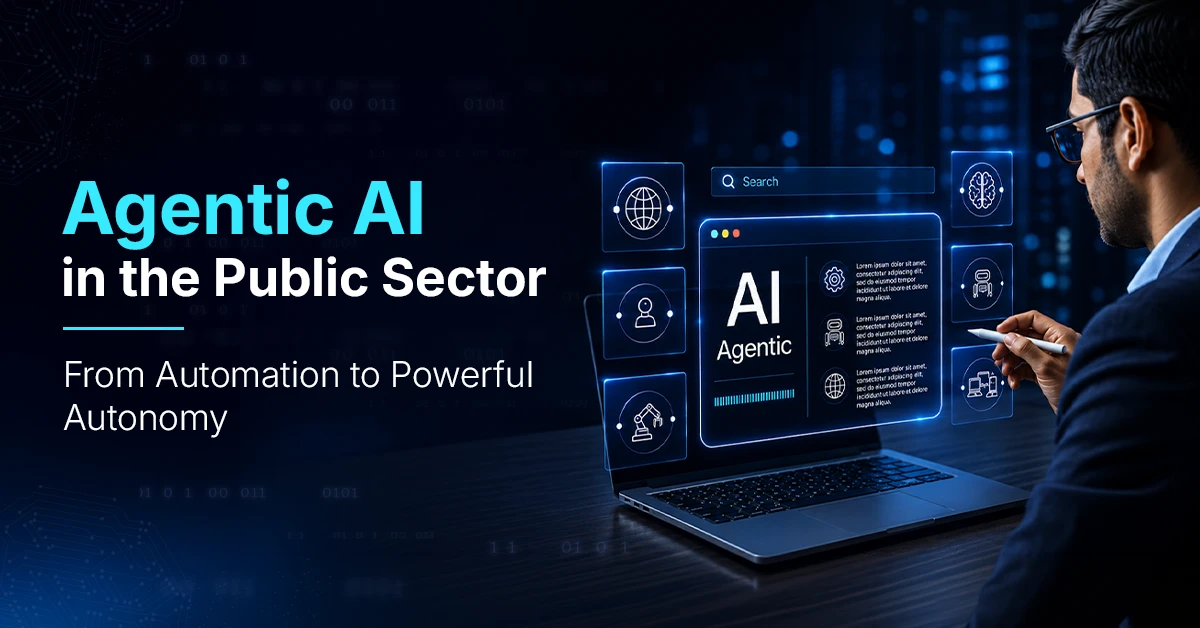
Every government I have worked with over the past two decades carries the same quiet frustration: citizens don't want a chatbot that answers politely and abandons them at the next form. They want a system that finishes the job. That distinction — between answering and acting — is the real story of Agentic AI in the public sector today, and it is far bigger than the "AI in government" headlines suggest.
From Digital Receptionists to Digital Caseworkers
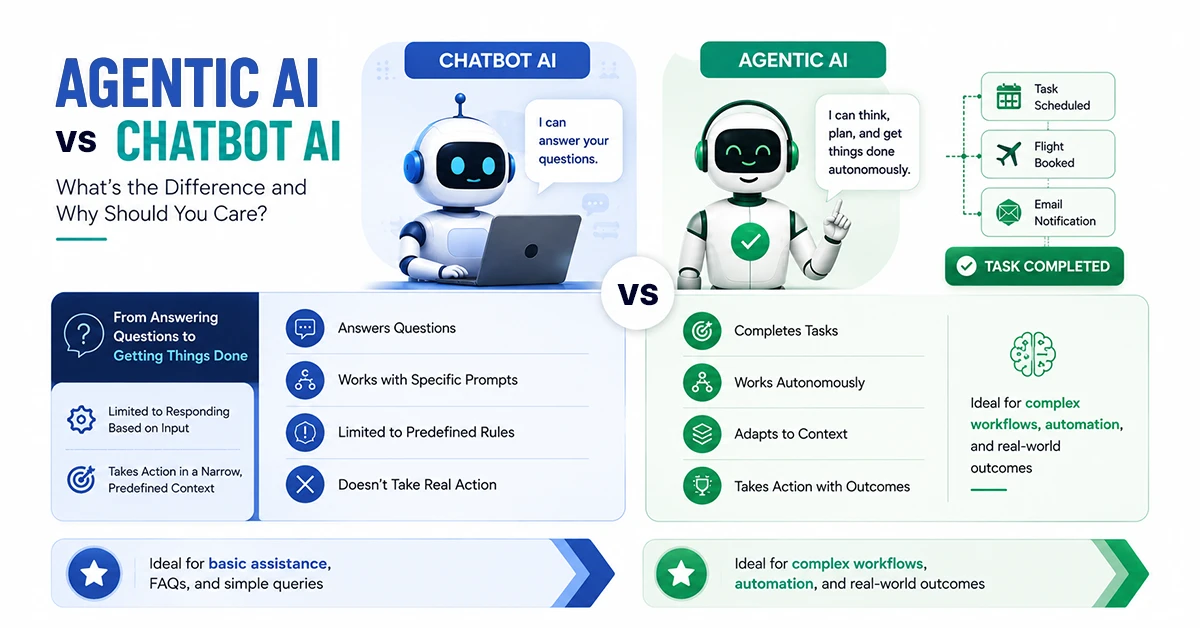
For years, government digitisation meant deploying friendly chatbots: reactive, scripted, capable of retrieving a fact but incapable of finishing a task. Ask about a pension status, get an answer; ask the bot to actually resolve the discrepancy, and you were routed to a human, a form, a queue. Chatbots were the receptionist at the counter — helpful, limited, and entirely dependent on someone else doing the real work behind the desk.
Agentic AI changes who does that work. These are goal-driven systems that plan multi-step processes, call APIs, cross-reference regulations across siloed databases, and execute administrative tasks with minimal hand-holding. Think less "digital receptionist," more "digital caseworker" — one who can pull your file, check three departments' records, flag an inconsistency, and complete the transaction, often before a human even opens the ticket.
India offers an early, instructive case. The Government of India's Gov.in Secure Intranet Platform is already piloting agentic capabilities inside everyday e-governance operations, moving from legacy rule-based workflows towards systems that adapt and coordinate across departments. This sits inside a larger national push: IDC's research for Dell Technologies found that nearly 98% of government leaders now see agentic AI as central to India's sovereign AI ambitions, particularly as the IndiaAI Mission scales domestic compute and model capacity.
Responsible Autonomy: The Real Test of Public-Sector AI
EY's 2026 "AIdea of India" report puts a number on the shift too — 24% of Indian enterprise leaders are already deploying agentic AI, even as 64.5% flag data governance as a serious concern. That second figure matters more than the first. Autonomy without governance is not innovation — it is risk wearing a good interface. The public sector cannot deploy an agent it cannot audit. Every action needs a trail; every high-stakes decision needs a human gate; every citizen record needs to sit on infrastructure the state actually controls.
The market reflects the urgency: global government spend on agentic AI is projected to grow from $2.33 billion in 2025 to $3.37 billion in 2026, and toward $14.41 billion by 2030, according to Research and Markets.
The World Economic Forum's 2026 Government Readiness Framework also highlights Agentic AI as a foundational capability for future public administration, provided governance, transparency and accountability remain central.
Yet technology alone will not determine success.
Governments must embrace what I call "responsible autonomy." Every AI action should be transparent, auditable and explainable. Human oversight must remain mandatory for sensitive decisions.
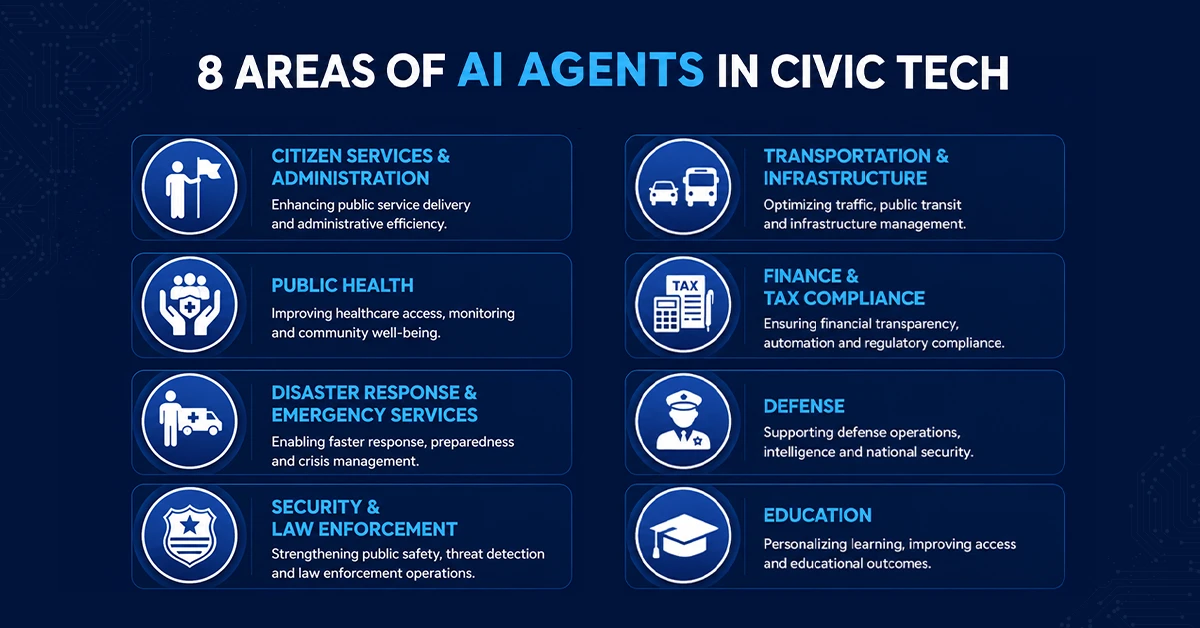
Equally important is reimagining the role of civil servants. Agentic AI is not here to replace administrators; it is here to amplify their capacity. Routine file movement, document verification, complaint routing and compliance monitoring can increasingly be handled by intelligent agents, allowing public officials to focus on policymaking, citizen engagement and complex judgment calls where human empathy and contextual understanding remain indispensable.
We are not automating government. We are finally teaching it to finish what it starts.


Recent Publications






- Agriculture and Allied Services
- AgriTech
- Application Development
- Artificial Intelligence
- Blockchain
- COVID-19
- CSM Editorial
- Data Analytics
- Digital service
- Digital Transformation
- Education
- EduTech
- Emerging Technologies
- Enterprise Resource Planning
- Food Security
- Golden Records
- GovTech Solution
- Green Jobs
- Healthcare
- HR Analytics
- Hybrid Work Culture
- Independence Thought
- Industry 4.0
- Innovation
- IT Consulting
- Land & Industry
- Life@CSM
- Memory Lane
- Mines & Minerals
- Mining Technology
- Opinion Piece
- Precision Agriculture
- Smart City
- Social Listening
- Social Media
- Social Registry
- Super Apps
- Tourism
- User Experience
- Web 3.0
- Work Culture

















We will verify and publish your comment soon.