











HR teams rely on employee records for everyday tasks such as onboarding, attendance, leave management and payroll. Keeping this information accurate takes time, and the workload continues to grow. The Hackett Group’s 2026 HR Key Issues Study expects HR workloads to increase by 9% in 2026, while staffing remains flat and operating budgets grow by just 1%.
Where the Hours Go
Consider an employee asking how many leave days they have left. Answering that question may require checking attendance records, comparing them with the leave system and confirming whether recent adjustments have been reflected in payroll. A routine request can involve several people and multiple records.
Payroll offers another example of the challenges created by fragmented systems. A 2026 UKG and KPMG survey found that 74% of respondents use more than two vendors to manage global payroll. The survey covered more than 300 senior leaders at multinational companies with over 10,000 employees and at least $5 billion in revenue.
The study estimates that these organisations lose 2% to 4% of total labour spend to payroll leakage, which can result from inefficient processes, system limitations and fraud. It also notes that pay accounts for 40% to 60% of operating expenses at most large companies. These figures relate to major enterprises and should not be treated as typical losses for every organisation.
When employee and payroll information is spread across multiple systems, keeping records consistent becomes more difficult. Teams may have to spend additional time checking figures, reconciling differences and confirming whether updates have reached the right place.
Why the Process Matters
Connecting systems is part of the solution, but the way work moves between them matters too. Gartner’s summary of a talent management session at its 2026 HR Symposium noted that integrated talent management efforts have fallen short for more than a decade, held back by siloed processes, legacy systems and unclear returns on investment. Nearly half of talent management leaders reported that misaligned internal processes cause friction and wasted effort.
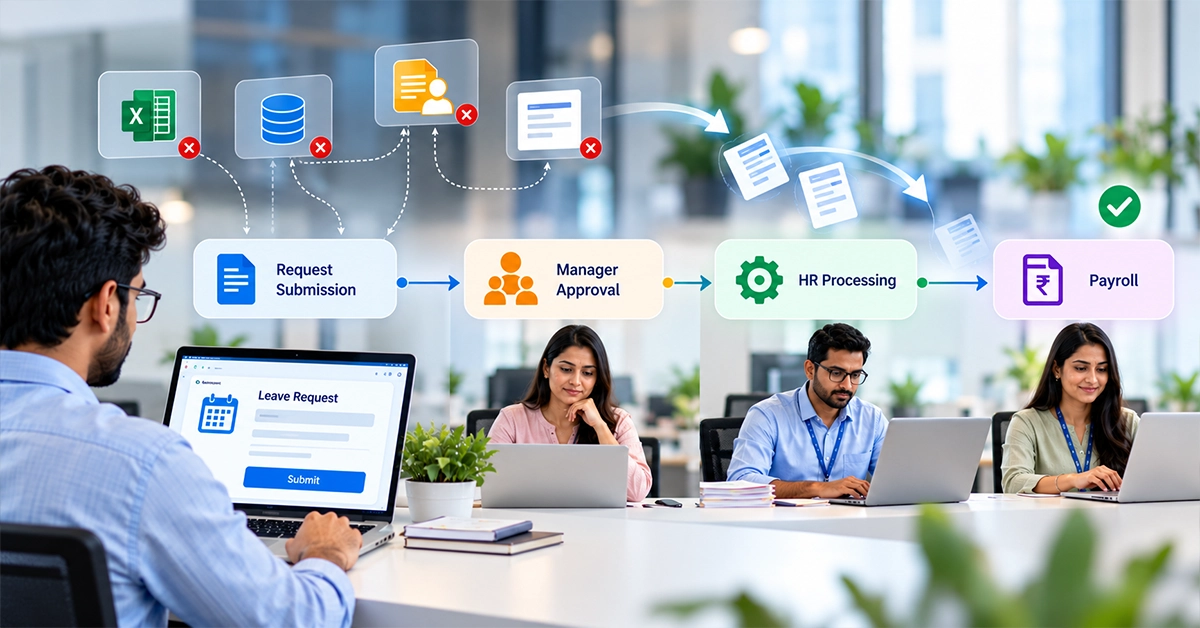
An employee's request should move from submission to approval and, where necessary, to payroll without requiring someone to enter the same information again. If the workflow is unclear or the systems do not share information properly, connecting them alone may not resolve the problem.
Bringing HR Functions Together
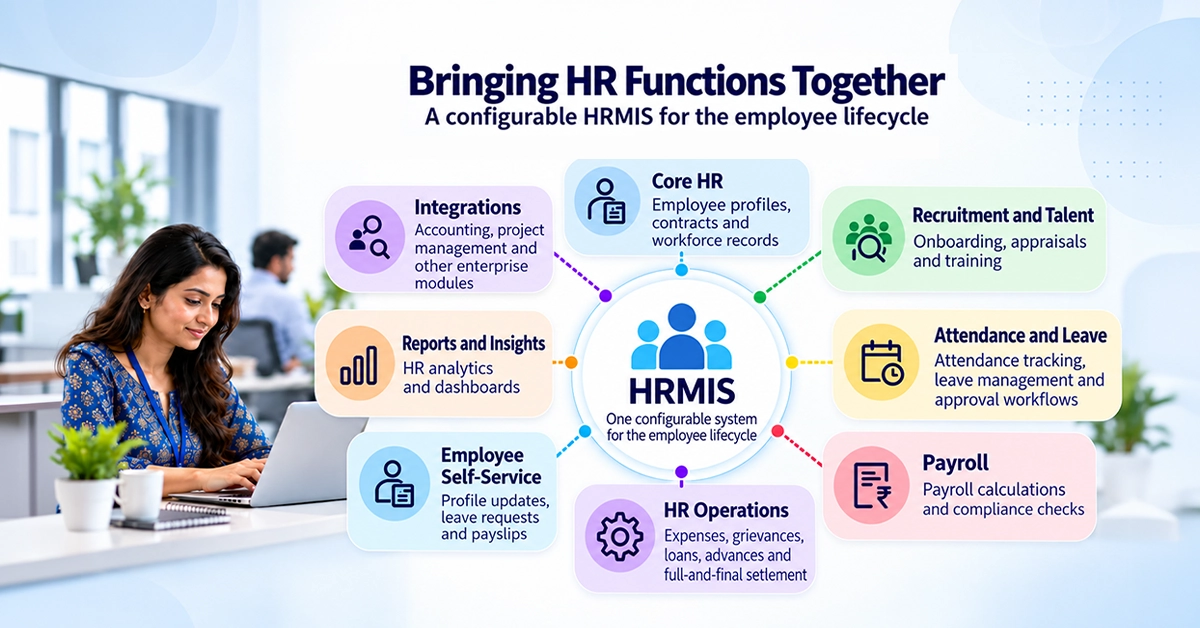
CSM Technologies’ Odoo-based HRMIS brings multiple HR functions into a configurable system covering the employee lifecycle, from recruitment to exit. Its capabilities include:
- Core HR: Employee profiles, contracts and workforce records
- Recruitment and Talent: Onboarding, appraisals and training
- Attendance and Leave: Attendance tracking, leave management and approval workflows
- Payroll: Payroll calculations and compliance checks
- HR Operations: Expenses, grievances, loans, advances and full-and-final settlement
- Employee Self-Service: Profile updates, leave requests and payslips
- Reports and Insights: HR analytics and dashboards
- Integrations: Accounting, project management and other enterprise modules
With relevant modules configured to share data, HR teams can spend less time checking the same information across systems. Leave rules, approval workflows and salary structures can be configured to reflect an organisation's policies. The modular approach also allows organisations to introduce functions in stages, depending on their requirements and data readiness. CSM has delivered similar systems in Odisha, Bihar and The Gambia.
Records Before Reports
Dashboards can show patterns in the information they receive, but they cannot make incomplete or inaccurate records reliable. In the Hackett study, data quality concerns were the most frequently cited barrier to getting value from AI in HR, reported by 48% of respondents.
Software cannot resolve unclear policies, incomplete employee records or poorly defined approval processes on its own. Reliable results depend on accurate records, clear workflows, appropriate system configuration and teams following agreed procedures.
The real measure of improvement is whether HR staff spend less time checking the same information across systems and more time using reliable records to manage their work and make decisions.


Recent Publications



- Agriculture and Allied Services
- AgriTech
- Application Development
- Artificial Intelligence
- Blockchain
- COVID-19
- CSM Editorial
- Data Analytics
- Digital service
- Digital Transformation
- Education
- EduTech
- Emerging Technologies
- Enterprise Resource Planning
- Food Security
- Golden Records
- GovTech Solution
- Green Jobs
- Healthcare
- HR Analytics
- Hybrid Work Culture
- Independence Thought
- Industry 4.0
- Innovation
- IT Consulting
- Land & Industry
- Life@CSM
- Memory Lane
- Mines & Minerals
- Mining Technology
- Opinion Piece
- Precision Agriculture
- Smart City
- Social Listening
- Social Media
- Social Registry
- Super Apps
- Tourism
- User Experience
- Web 3.0
- Work Culture












We will verify and publish your comment soon.