





















On Earth Day 2026, the theme “Our Power, Our Planet” serves as a powerful reminder that the responsibility to shape a sustainable future lies with all of us. For businesses in the digital age, that responsibility extends beyond operations and into the very fabric of technology-the code we write.
At CSM , this belief has driven a fundamental shift: to harness the power of technology not just for innovation, but for environmental stewardship.
.jpg)
The Hidden Cost of Digital Growth
Digital transformation is often perceived as clean and intangible. However, the reality is far more complex. The global technology ecosystem today contributes between 1.8% to 3.9% of global greenhouse gas emissions, putting it on par with the aviation industry. Data centres alone consume nearly 1–1.5% of the world’s total electricity, with global consumption estimated at over 200 terawatt-hours (TWh) annually, comparable to the energy usage of entire nations.
The impact does not stop there. Rapid growth in data traffic, rising by nearly 25% every year, is driving exponential expansion of server infrastructure and network capacity, further increasing energy demand. Additionally, studies indicate that inefficient coding practices can raise energy consumption by up to 30%, while optimized code can reduce it by as much as 50%.
As digital adoption accelerates, so does the urgency to rethink how software is designed, developed, and deployed. This is where green coding emerges, not as an option, but as a necessity.
A Shift from Efficiency to Responsibility
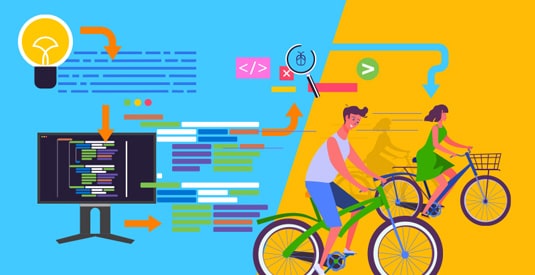
At CSM, the journey toward sustainability began with a simple realization: every line of code has an environmental consequence.
As the CEO , MD Cum Chairman , Priyadarshi Nanu Pany emphasizes:
“Every line of code, every algorithm, and every app subtly but surely adds to our global carbon emissions… less is more. Do more with less.”
This perspective has inspired a cultural shift within the organization—encouraging teams to move beyond performance metrics and consider the environmental impact of their work.
.jpg)
How CSM is Practicing Green Coding
CSM’s approach to green coding is embedded across its technology lifecycle, combining innovation with accountability:
- Optimized Architectures: Development teams focus on lean, efficient code and algorithm selection to reduce computational load and energy consumption.
- Cloud Efficiency: By leveraging cloud-native environments and continuously monitoring workloads, CSM minimizes unnecessary resource usage and enhances scalability.
- Real-Time Monitoring: Tools that track CPU, memory, and system performance help identify inefficiencies and guide optimization efforts.
- Low Code No Code. Because the greenest code is often the code you never had to write. LCNC platforms reduce processing overhead, cut computational redundancy, and accelerate delivery, all while consuming fewer resources.
- AI-Led Enhancements: Artificial intelligence is being used to automate code optimization, select energy-efficient algorithms, and predict system inefficiencies—ensuring sustainable performance at scale.
These initiatives ensure that sustainability is not an afterthought but an integral part of engineering decisions.
Impact Beyond Code
Green coding at CSM goes beyond development practices. Efficient software reduces processing time, which in turn lowers energy demand in data centres and decreases cooling requirements. It also enhances application performance, improves user experience, and extends device battery life.
Even small optimizations, when applied across large-scale systems, create a ripple effect of energy savings and reduced emissions. This demonstrates how responsible coding can directly contribute to environmental sustainability.
Aligning with “Our Power, Our Planet”
The Earth Day theme resonates strongly with CSM’s philosophy. The “power” lies in the ability to innovate, build, and scale digital solutions. The responsibility is to ensure that this power is used wisely, with minimal impact on the planet.
By embedding sustainability into its technology practices, CSM is transforming digital power into a force for environmental good.
.jpg)
The Road Ahead
The journey toward green coding is continuous. It requires ongoing innovation, awareness, and collaboration across the technology ecosystem. As sustainability becomes a critical parameter alongside performance and security, organizations must evolve their development practices accordingly.
CSM remains committed to leading this transformation—leveraging technology to reduce carbon footprints while delivering impactful digital solutions.
A Collective Call to Action
As we reflect on Earth Day 2026, the message is clear: sustainability is a shared responsibility. For the technology sector, it begins with conscious coding.
Because the future of our planet will not only depend on the technologies we create— but on how responsibly we create them.


Recent Publications






- Agriculture and Allied Services
- AgriTech
- Application Development
- Artificial Intelligence
- Blockchain
- COVID-19
- CSM Editorial
- Data Analytics
- Digital service
- Digital Transformation
- Education
- EduTech
- Emerging Technologies
- Enterprise Resource Planning
- Food Security
- Golden Records
- GovTech Solution
- Green Jobs
- Healthcare
- HR Analytics
- Hybrid Work Culture
- Independence Thought
- Industry 4.0
- Innovation
- IT Consulting
- Land & Industry
- Life@CSM
- Memory Lane
- Mines & Minerals
- Mining Technology
- Opinion Piece
- Precision Agriculture
- Smart City
- Social Listening
- Social Media
- Social Registry
- Super Apps
- Tourism
- User Experience
- Web 3.0
- Work Culture



















We will verify and publish your comment soon.