




















Transforming Public Services and Citizen Engagement
Governments worldwide are at an inflection point. The traditional models of public administration, paper-laden, siloed, and slow, are giving way to a new paradigm powered by Artificial Intelligence. From predicting crop failures weeks before they occur to automating land title registrations that once took months, AI is fundamentally rewriting the contract between citizens and the state. Nowhere is this transformation more urgent, or more promising, than across the African continent.
Africa stands at a rare convergence of demographic pressure, resource wealth, and digital leapfrogging. With over 1.4 billion people, more than 60% of the world's uncultivated arable land, and a rapidly growing youth population demanding efficient public services, African governments face a governance challenge unlike any in history. AI is not a luxury in this context; it is a necessity. The question is no longer whether to adopt AI in public services, but how fast, how deep, and with what equity.
"AI is not replacing governance in Africa; it is finally making governance possible at scale."
Global vs. Africa: The AI Governance Landscape
The global AI market in government is on a steep upward trajectory. Globally, the AI market was valued at approximately USD 196.6 billion in 2023 and is projected to grow at a compound annual growth rate (CAGR) of 37% through 2030. Governments worldwide have deployed AI in tax compliance, social benefit distribution, border security, urban planning, and agricultural advisory services. In Asia, the United States, and Europe, AI-driven governance is saving billions in fraud detection, accelerating permit approvals, and enabling real-time crisis response.
Key Global AI Statistics:
|
Global AI in Govt Market (2023) |
USD 14.2 Billion |
|
Projected CAGR (2024–2030) |
~22.4% |
|
Countries with National AI Strategy |
70+ Nations |
|
AI-Driven Tax Recovery (avg. ROI) |
3x to 8x |
|
Reduction in Public Service Fraud (AI-enabled) |
Up to 30% |
Africa's Position in the AI Governance Race
Africa, while earlier in its AI adoption journey, is showing remarkable acceleration. The African AI market was estimated at USD 2.9 billion in 2023 and is projected to reach USD 17.9 billion by 2030, a trajectory that outpaces most other regions. Several African nations, including Kenya, Rwanda, Ethiopia, and South Africa, have published national AI strategies or digital transformation roadmaps. Rwanda's Smart Rwanda initiative and Kenya's Digital Economy Blueprint are emblematic of this momentum.
Africa AI Adoption Snapshot:
|
Africa AI Market Size (2023) |
USD 2.9 Billion |
|
Projected Market Size (2030) |
USD 17.9 Billion |
|
Mobile Internet Penetration (2025) |
~45% |
|
African Farmers as % of Workforce |
~60% |
|
Agriculture's Share of Africa's GDP |
15–35% (varies by country) |
Despite the gap with developed economies, Africa's digital leapfrog story is real. Mobile-first infrastructure, growing cloud adoption, and young tech-savvy populations are creating the conditions for AI to transform governance faster than conventional infrastructure development ever could.
.jpg)
Why AI in Agriculture? The Urgency of a Digital Agrarian Revolution
Agriculture is the lifeblood of Africa. It employs more than 60% of the continent's workforce and contributes between 15% and 35% of GDP across most sub-Saharan countries. Yet African agriculture remains chronically underperforming relative to its potential. Average crop yields are two to four times lower than global benchmarks. Post-harvest losses can reach 30-40% due to poor storage, fragmented supply chains, and limited market access. Climate change is making rainfall patterns unpredictable and pest cycles erratic.
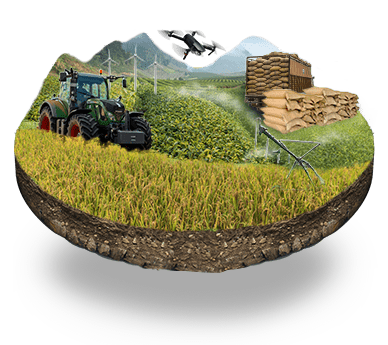
AI changes this equation fundamentally. Machine learning models can analyze satellite imagery, weather patterns, soil sensor data, and historical yield records to generate hyper-local, season-specific advisories for individual farmers. Early warning systems powered by AI can detect pest invasions weeks before they devastate crops, enabling timely intervention. AI-driven soil information systems can prescribe precise fertilizer and water inputs, reducing input costs while improving yields. For smallholder farmers who have historically been the last to receive extension advisory services, AI finally delivers personalized, real-time, mobile-accessible guidance.
Agriculture feeds Africa. AI can feed agriculture, with intelligence, precision, and speed that no extension officer network alone can match.
Beyond the farm gate, AI powers supply chain optimization, commodity price forecasting, and procurement automation, ensuring that what farmers grow actually reaches markets at fair prices. Integrated Farmer Registries, enabled by AI-based data validation, ensure governments know exactly who their farmers are, enabling targeted credit, insurance, and input subsidy delivery. The result is a fully digitized agricultural value chain, from seed selection to food security policy.
.jpg)
The Pain Points
Despite the immense promise, AI adoption in African agriculture confronts serious structural and technical barriers. At the foundation, much of the continent's agricultural data, land records, farmer profiles, soil maps, and yield histories exist in fragmented paper registers or not at all. Without clean, interoperable data, AI models produce unreliable outputs. Compounding this, rural Africa remains severely underserved by reliable connectivity and power supply, limiting the reach of real-time AI advisory tools precisely where smallholder farmers need them most. Even where smartphones and networks exist, low digital literacy, language barriers, and cultural skepticism toward technology create adoption resistance that purely technical solutions cannot overcome.
Beyond the farm and the farmer, institutional barriers present equally formidable challenges. Government ministries of agriculture, land, finance, and commerce typically operate in silos, each with separate IT systems and data standards, preventing the whole-of-government data architecture that AI requires to deliver integrated insights. Meanwhile, many AI pilots in Africa begin as donor-funded projects that dissolve when funding ends, leaving no lasting institutional capacity. Building local AI talent, establishing sustainable budget frameworks for technology maintenance, and enacting clear national data governance policies are not optional add-ons; they are the foundations on which any durable AI transformation must rest.
CSM Tech's Expertise in AI-Powered Agriculture and Governance
CSM Technologies, with over 25 years of proven delivery across Asia and Africa, offers a fully integrated suite of AI-enabled platforms purpose-built for the African public sector. Its Crop Analytics and Early Warning and Pest Monitoring System combines satellite imagery, field sensor data, and predictive modeling to give farmers and government agencies real-time intelligence on crop health, pest risk, and yield outlook, deployed successfully in Kenya and Ethiopia. The National Soil Information System creates a living, AI-driven database of soil health indicators that transforms soil management from a periodic survey into a continuous, data-guided practice.
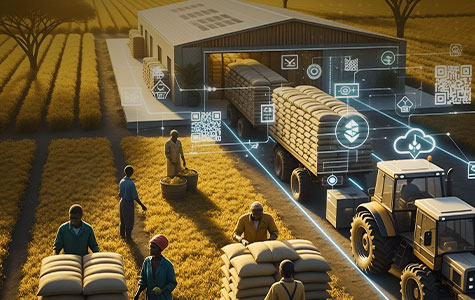
On the identity and land management front, CSM's Unified Farmer Registry provides a single authenticated source of truth for farmer profiles, enabling targeted credit, insurance, and subsidy delivery through the Unified Farmer Credit Portal. LANDMAS, CSM's AI-powered land platform, digitizes land allotment, title registration, and GIS-based conflict detection, reducing disputes and accelerating investor facilitation. The Digital Warehouse Receipt System, deployed in Kenya, connects post-harvest grain storage to formal credit markets, while the CSM AI Foundry gives government agencies the tools to build, deploy, and govern custom AI models without needing large in-house technology teams. Together, these solutions have impacted over 50 million citizens and managed over USD 486 million in tracked transactions across Africa.
.jpg)
Conclusion and Way Forward
Africa's AI governance transformation is no longer a prospect; it is underway. The imperative now is to accelerate it with intention, ensuring that foundational infrastructure, data governance, and local capacity are built alongside the technology itself. AI does not succeed as an isolated tool; it succeeds when land management, farmer identity, soil intelligence, credit access, and market platforms form a connected ecosystem that compounds value at every layer.
The seeds of Africa's AI-powered governance transformation have been planted. With the right cultivation, grounded in evidence, driven by data, and anchored in genuine partnership, the harvest will define the continent's trajectory for generations to come.


Recent Publications





- Agriculture and Allied Services
- AgriTech
- Application Development
- Artificial Intelligence
- Blockchain
- COVID-19
- CSM Editorial
- Data Analytics
- Digital service
- Digital Transformation
- Education
- EduTech
- Emerging Technologies
- Enterprise Resource Planning
- Food Security
- Golden Records
- GovTech Solution
- Green Jobs
- Healthcare
- HR Analytics
- Hybrid Work Culture
- Independence Thought
- Industry 4.0
- Innovation
- IT Consulting
- Land & Industry
- Life@CSM
- Memory Lane
- Mines & Minerals
- Mining Technology
- Opinion Piece
- Precision Agriculture
- Smart City
- Social Listening
- Social Media
- Social Registry
- Super Apps
- Tourism
- User Experience
- Web 3.0
- Work Culture





















We will verify and publish your comment soon.